Octavia (part two)

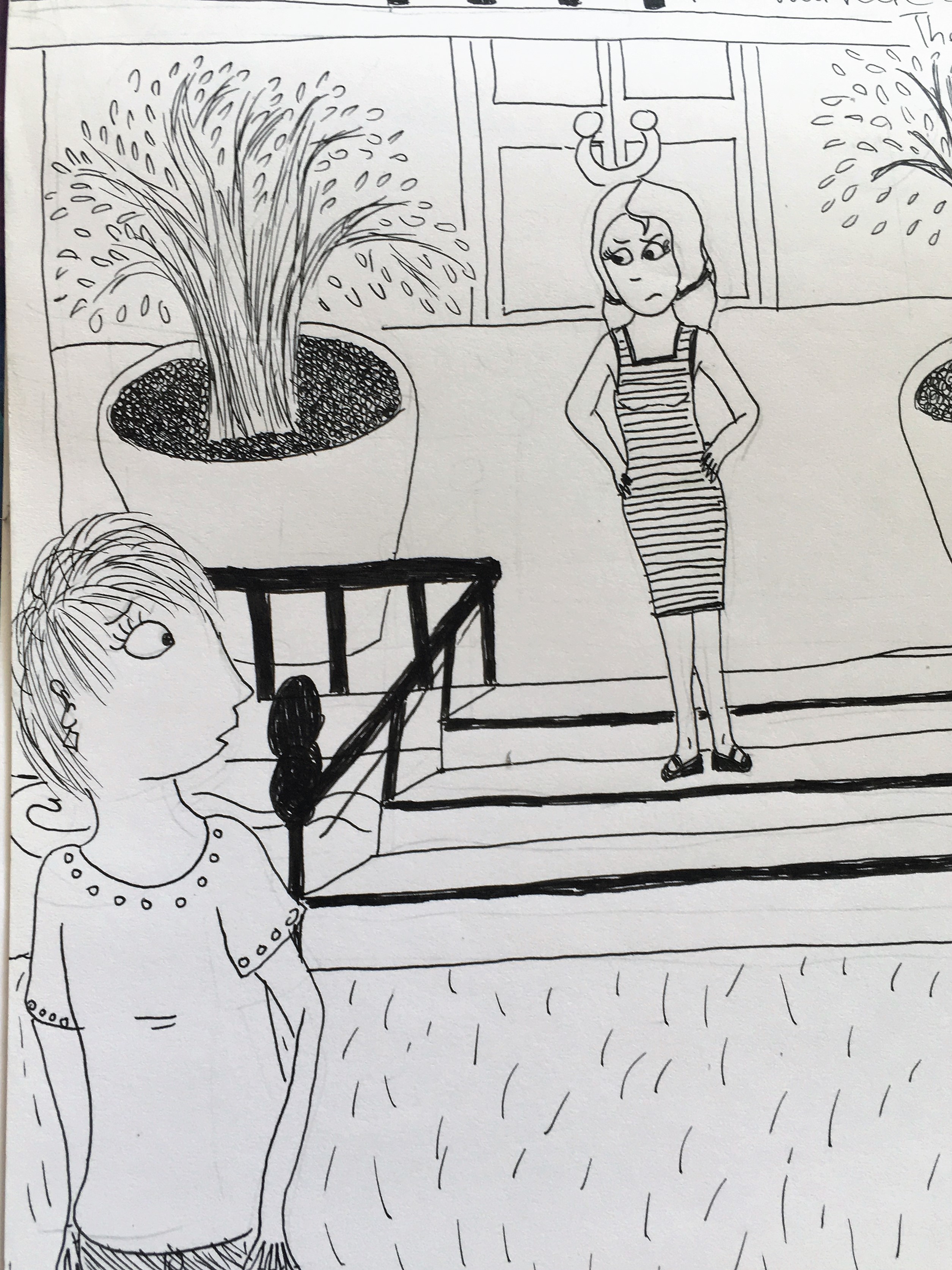
“Get out of my sight,” she said, and Octavia did, because she couldn’t control her mouth and couldn’t control her behaviour, despite every effort that had been made for her, despite every opportunity she’d had, she seemed to think she didn’t have to try.

*

LeFay Gems referred to themselves as a “jewellery powerhouse,” and from the way they all talked, you’d think they held the fate of the world in their hands.  Their upcoming product launch had been described as “a watershed moment” and “an epoch-defining event.”  They weren’t just drumming up interest in their new line of bracelets, they were “ushering in a new era of beauty and class.”  And if that was the case, Octavia thought, then they really ought to get around to spending some money on it.

“It’s the caterers, mainly,” Octavia explained to the CEO, a beefy little git with no neck to speak of, “They don’t want the whole fee paid up front, but they do want a deposit putting down.  And the same’s probably going to be true for the musicians.”

The CEO, sitting at the opposite end of the long glass table, raised his chin, as if he was willing himself to grow taller so that he could tower over Octavia.  “Maybe you should impress upon them how much LeFay Gems values loyalty.  How grateful we’d be for their services.  We don’t forget the people who go the extra mile for us.”

Yeah, that’s what I’ll tell them.  “You should take this job because then the guy who’s too stingy to pay a deposit will owe you a favour.”  “And they will go the extra mile, but you need to do your part first.”

The CEO’s nostrils flared.  George Chandler, his name was, and he’d made his first million by the age of forty (after his parents had already lent him ten million or so to get his company started).  “Miss Lambton, I’m sure that if you told them how important this event is to us, they’d be able to work something out.”

“You might have to convince them that it’s important to them, too.”

You’d think she’d just kicked him in the balls.  “Convince them?”

“They need to eat,” said Octavia, “They can’t pay their rent with gratitude.”

“Let me explain something to you,” said Mr Chandler through gritted teeth, “There are catering companies who would jump at the chance to work for us.  It wouldn’t even occur to them to ask about the deposit.  If you were willing to spend five minutes of your time looking around, you’d have found that out already.”

“Well, feel free to get in touch with one of those companies yourself,” Octavia said breezily, “but the ones I work with like to be paid on time.” 

He stood up, his chair legs audibly scraping against the floor as he pushed it backwards.  “You think you’re pretty clever, don’t you?”

Octavia smoothed down her skirt.  “Sort of assumed that you thought that as well.  Otherwise you wouldn’t have hired me.”  There was a chance that that was exactly what he wanted to hear, but only a small one.  Men like him said they valued ingenuity and frankness, but most of the time they only valued it in themselves.

“I took a chance on you,” Mr Chandler spat, “I thought, young woman, little company, why not give her a chance to prove herself?”

In other words, I was cheaper than the others, thought Octavia.  Maybe LeFay Gems was going through some money troubles that hadn’t been made public yet.  Or maybe Mr Chandler had his hand in the till.

“But you’re an amateur.  A complete amateur.  You’re like a little girl trying to play with the grown-ups.  I don’t know what you were doing before, but maybe you should go back to that.”

Octavia rose from her seat, picking up her files from the table.  “I think we’re done here,” she said with a smile.

“People are going to hear about this!” he called after her as she left the office.  But by then, Octavia was thinking about something else.

A man who’d try to get out of giving caterers the deposit they’d asked for would probably have tried to get out of a few other things in his time.  If Octavia got in touch with some of LeFay Gems’ suppliers and ex-employees, she’d probably hear a few stories about being paid in gratitude from them, too.   If the papers got hold of that, George Chandler would be in for an uncomfortable couple of weeks, especially if her hunch about embezzlement turned out to be true.

It was a shame she wouldn’t actually get to plan the event, although she relished the idea of Mr Chandler having to sweat a bit to put something together at short notice.  This sort of thing happened sometimes- it was a side-effect of working with people who found it impossible to process the idea of not getting their way.  And in some ways, the look on their faces when you stopped sucking up to them was more satisfying than anything they could pay you.

*

Octavia wandered the streets, her eyes and cheeks and nose sore enough to bleed, the rain from earlier soaking into her shoes, the wind blowing through her as if she was barely there at all, because she had nowhere to go, no place in the world that wasn’t a constant reminder of how wrong she was, how she’d been OK when she was born but had let herself be degraded a little more every day since, how it was terrible to imagine how she’d be if she lived to twenty.

*

Mr Ashley’s house was a little way outside of Torquay, in a tiny cul-de-sac surrounded by trees.  The house was old and somehow kindly-looking, but it was possible that Octavia only thought that because she associated it with Mr Ashley himself.

Two decades ago, Mr Ashley (first name Christian, but Octavia had never been able to bring herself to use it) had been Octavia’s music teacher.  Sometimes it seemed as if all the adults who’d had a positive influence on Octavia’s childhood had been paid to be there.

This afternoon, she got to the house before the girls had finished school, which meant that she and Mr Ashley got to sit in the kitchen for an hour, drinking tea.  Octavia didn’t know why the tea Mr Ashley made tasted so much better than any other kind, but it did.

“Amber’s been in a bit of trouble at school,” he told her.  For a man in his sixties, Mr Ashley was remarkably fresh-faced.  There were faint creases around his eyes and mouth, but that was all.  “Apparently she kept trying to climb the fence at breaktime.  She apologised, for what it’s worth.  She said she wasn’t trying to escape.  Apparently, the fence was just calling to her.”

Octavia sighed.  “She’s her mother’s daughter, alright.  I’ll talk to her.”  The kitchen was decorated in warm browns and yellows, and probably hadn’t been updated much since the Seventies.  Definitely not since they’d bought the house, and that had been over a decade ago.  “Speaking of Amber, have you thought any more about what we’re going to do for her birthday?”

“She mentioned Finch’s Amusements, but I don’t know if the weather will be nice enough.”

“Have to get her to come up with a backup plan, yes.”  She pretended to shudder.  “Just not a disco this time, alright?”  That had been what they’d done for Saffron’s birthday back in March, and it had been a nightmare.  Sixteen nine-year-olds bouncing up and down to three hours of the most irritating songs they could find, while Octavia and Mr Ashley had nervously eyed the dangerous-looking power cables attached to the equipment the “MCs” had brought.  To make matters worse, Octavia got the impression that Saffron would have been just as happy with a trip to Pizza Hut.  Next time, she’d suggest that first.

If Octavia’s mother knew that her only two grandchildren so far were named Amber and Saffron, she’d have kittens.  She considered herself an authority on what names people should and shouldn’t give to their children.  “Classless,” she’d proclaim upon hearing that someone she knew had had the gall to name their new baby Samantha or Nicola (as opposed to her own name, Josette, which her parents had given her in one of many attempts to trick people into thinking they were French and therefore cultured.)

Amber and Saffron’s last name was Zane, which was Octavia’s married name.  Her late husband hadn’t been the father of either of them (for one thing, he’d died about seven years before they were born, and for another, he and Octavia had never had sex), but out of the two names she could have passed down to them, she thought it was best to pick the one that wasn’t shared by her parents.  It had seemed cruel to shackle two children to the Lambton family before they could even walk.

(To Be Continued)

Rosalyn and the Origins (part 4 of 4)

(From On the Trail of Kelpie and Silkie by Rosalyn Pepper, published 2012)

We were in luck.  Raymond Underhill was not just still alive (aged 84), but still living in Coney Park.  He and his wife Frances had a little white house a few roads back from the high street, and when we called on them, they told us they’d be happy for us to drop by.

All three of us were taken aback by just how pleasant they were- a good-natured, sprightly old couple who seemed genuinely excited to talk to us.  Frances rushed off to make tea for everyone, while Raymond sat us down in the living room and chatted enthusiastically about his old newspaper days.  In the two hours we spent talking to him, I didn’t see a trace of the man who’d written that article fifty years earlier.  As the afternoon went on, though, I began to see why that was.

“There was a work-release programme, you see,” he told us, “A lot of the Elm Gates girls went to work at some of the local shops.  ‘Working their way back into society,’ the higher-ups said.”

“Which shops were these?” I asked.

“Oh, they’re all gone now.  The general store.  Pinkerton’s Haberdashery.”  (I started at that, but tried not to show it.)  “The Lakeside Cafe.  Not in the pub, though- people thought it best to keep them away from temptation.”  He chuckled.  “Didn’t want anyone falling off the wagon!  But around this time, a few of the girls started complaining.”

“What about?”

“Er… Well, in general, not being treated properly.  Starvation rations, being bullied by other staff members, that sort of thing.  I didn’t necessarily believe it- it all sounded a bit too much like Oliver Twist to me- but it wasn’t my idea to write that article.  Back then, you had to toe the editorial line if you wanted to keep your job.”

“Whose editorial line?” I asked, “I mean, who was your boss?”

“Peter Devereaux was the editor in those days.  He made out that he was angry that the Elm Gates girls had slandered the shopkeepers, when we all knew them and they were good, charitable people…  But honestly, I think he’d have taken any excuse to be angry.  He was one of those people who are never happier than when they’re looking down their nose at someone.”

I nodded.  It was on the tip of my tongue to ask about Siobhan McCluskey… but I didn’t.  He hadn’t mentioned her on his own, and I didn’t want to lead him.  Instead, I showed him the picture on my phone.  “The reason we started looking into Coney Park’s history is that it’s mentioned in this piece of writing.  Apparently, it’s been there since the 1970s.”

Raymond squinted at the phone.  “Can’t read anything from a screen that small.  Can you read it out to me?”

I did.  “Do you know what it might be referring to?”

Raymond sat back in his chair, looking thoughtful.  “Well, if it’s been there since the Seventies, then my guess is that it’s about that tourist girl who drowned.  Alison Winters.”

I think my mouth might have actually swung open in shock.  “I’ve read about her!”

Raymond smiled.  “But I bet you didn’t read about the things her friends said afterwards, did you?”

I shook my head.

“No.  ‘Course you didn’t.  The paper didn’t want to give them ‘the oxygen of publicity’- that was how they put it.  But her friends said that the lifeguards took a lot longer to come to their rescue than they should have.  And when they did come, they didn’t realise how badly Alison was hurt at first.  They told them off for ‘clowning around’ when they should have been helping her.”

I thought about the guy in the newsagent.  And of course they just got a slap on the wrist for it.  Life’s just not fair.  “Do you think that’s what happened?”

Raymond shrugged.  “Well, I wasn’t there… but it might have been.  Those lifeguards work long hours, and they‘ve never had much patience with the tourists.”  He tutted.  “But it never went anywhere.  The lifeguards all denied it, and nothing could be proved.  Besides, the coroner said she’d have drowned almost immediately- they wouldn’t have had much of a chance of saving her either way.”

I could imagine one of Alison Winters’ friends, in a fit of rage and grief, writing the message on the railway bridge.  But I could also imagine one of the girls from Elm Gates doing the same.  Or somebody who knew Siobhan McCluskey.  Maybe even Bernard French’s wife and daughter, if Ben Sugar was wrong about how long the graffiti had been there.

Later that afternoon, probably an hour or two before sunset, I was standing by the lake with Judith, and I finally asked her the question that had been playing on my mind for most of the last two weeks.  “How did you end up going to live with your aunt and uncle?”

As soon as I said it, I worried that it had been a rude question, but Judith answered it without hesitating for a moment.  “Well, our mother had substance abuse issues- has substance abuse issues, unfortunately- so it was decided that Harriet and me would be safer elsewhere.”  She leaned forward on the fence, looking out over the water.  “I think they did a good job.  Honestly, in some ways they really spoilt us.  Did you know, your friend Isaac guessed that I used to have riding lessons?  I must just have that aura.”

I laughed, less at what she’d said and more at how wrong I’d been.  I’d almost convinced myself that Judith’s leg-in-the-fireplace story had been the real story of what had happened to her and her sister.  It must have been the last few weeks catching up with me- there were so many stories floating around, and it was impossible to tell which ones I should pay attention to.

“Three more days,” I told Judith.

“Mm.”  She turned sideways, still hanging onto the fence.  “What are you going to do when you get back?”

“Um… there’s a few more weeks until university starts up again.  I’ll probably have time to look up some of Alison Winters’ friends, see if I can find out anything else.”  Maybe I shouldn’t have paid attention to any of the stories.  Maybe the person who’d written the graffiti had just been mucking about.  But if I’d come this far, then I might as well see it through to the end.  “Shame we have to go back, though.”

“Sorry,” said Judith with a wry smile, because in her head, we were only going home at the end of the week because her job needed her back.  It wasn’t true, though- my parents and Denny’s brother and sister would also start getting impatient soon.  “I am glad we came.  I’ve seen the effect it’s had on Denny, for a start.”

(Denny had hung back to get something from the shops.  It didn’t occur to me until that exact moment that he might have deliberately left me and Judith alone together.)

“He seems like he’s relaxing a lot more, yeah,” I said, “I was worried it might get too much for him, being in an unfamiliar place, but he doesn’t seem to have any problems.  None that he’s let me see, anyway.”  Jonathan and Octavia had run through a few worst-case scenarios before we left, but so far, I hadn’t needed to remember what they’d said.

Judith’s face was pointed into the wind, with her hair blowing out behind her like a flag or a banner.  I hadn’t really thought about it until then, but she looked a lot like Bronwen, the girl I’d met in Cornwall as a child.  The same long dark hair, the same long athletic limbs.  The same willingness to accommodate other people’s strange plans.

I moved over to her side, gripping the fence next to her.  “Keep a look out,” she told me, “I’m not completely sure, but I think I’ve just seen a couple of otters on the banks.  If we keep quiet, they might swim out so we can see them properly.”           

I moved closer to her, staring at the lake and waiting for the otters to appear.

(The End)

Octavia (part one)

(I haven’t finished the final part of “Rosalyn and the Origins” yet, so I thought I’d put this up as a stopgap.)

*

Autumn 2006

Octavia Lambton’s parents had been an actor and a society hostess, but they’d periodically declared themselves experts in other career paths, too.  Whenever somebody annoyed them, Robert and Josette Lambton would make much of their connections in that person’s field, be it catering, charity, politics, teaching, or anything else.  You name it, they knew somebody with power over it.  “They wouldn’t give you the time of day,” they’d say, “In fact, I rather think they’d call security.”

It had been overwhelming to think of their power.  No matter what you chose to do in life, they could ruin you with a single word in the right place.  It would have been impossible to stand against them.  All you could do was try to stay invisible and hope that they attacked someone else instead.

Octavia must have been around thirteen or fourteen when she first noticed the looks people sometimes gave her parents.  People rolling their eyes when they talked, and stifling giggles when they turned their backs.  It took a while to work out what that meant, and a lot longer to believe it, but as soon as she did, it felt as if the whole world had been turned upside-down.

She’d learned a lot more over the years.  When she was younger, she’d worked admin in a few prominent corporate firms, where she noticed that people tended to waffle a lot about “brand loyalty” and “customer-centric strategies” when they didn’t really know what was going on.  Later on, she’d branched out into her mother’s old line of work, except Octavia actually got people to pay for it.  Goldemar Event Planning, book us and watch your party stock rise.  You wouldn’t have thought that people would fall so easily for the ‘I’ve heard so much about how extravagant and tasteful you are’ approach, but they did, and in huge numbers.  Deep down, nobody knew what they were doing.  And they were all terrified of getting caught.

It was Goldemar Event Planning that had led her to Tamsin Doggett’s door.  Octavia knew, logically, that Tamsin was probably somewhere in her mid-twenties, but between the nervous smile, the weird little lisp, and the way she was flicking her hair around, she could have been mistaken for thirteen.

“I knew it had to be you,” she told Octavia, sitting opposite her in her cramped living room, “Isaac was just telling me how he worked for your brother last year, and then I saw an ad for your company in the paper.  It was like fate.”

Octavia grinned.  “I love it when these things come together.”  Tamsin, this is a bad idea.

Tamsin sat up straight, and seemed to narrow her body as she did it, bringing her knees and wrists closer together like a book closing.  “It’s going to be a vow renewal ceremony.  We’ve been through so much, and I want us to take a moment to celebrate what we mean to each other.”

“Sounds lovely.”  Tamsin, I’m not the person you want for this.  “What time of year were you thinking?”

“Definitely summer.  I know you’ve got to plan.  And who wants to renew their vows when the weather’s miserable?”  She gave a snuffly little laugh.

“Oh, there’s ways to plan around it… but if summer’s what you want, I’d go for July.  Just after term ends.”  Tamsin, I only started this business to fleece horrible rich people, and you’re not rich and barely horrible at all.  Reconsider this.  “That way, any parents you invite can just bring their kids along instead of having to dither for weeks about schedules.”

“That sounds amazing,” said Tamsin, stretching out that last word as far as it would go.  “I’m thinking of a fairy tale theme- children will love that.  So I want them to be there.”

Octavia clasped her hands together.  “Tamsin?  If it’s not a rude question… what made you want to hire an event planner in the first place?  You know what you want, and you’ve got plenty of ideas already…”

It took Tamsin a moment or two to answer.  “I want this party to be special.”  She shrugged.  “And I don’t know how any of these things work.”

Octavia smiled, and leaned forward.  “Let me let you in on a secret, Tamsin- deep down, nobody knows how anything works.  You probably have just as much of an idea as me.”

Tamsin laughed.  “Then can you give me a discount?  Mates’ rates?”

Ah well.  She’d been as honest as she could.  “I don’t see why not.”

(To be continued)

Rosalyn and the Origins (part 3 of 4)

Denny heard the mattress army marching up towards him, and settled into listening to it before he was even fully awake.  It felt right.  As long as he was here, listening to them, he knew he wasn’t causing any trouble.

But then there was another noise.  Little, scurrying steps from up above him.  A duck?  A squirrel?  Denny listened to the steps and tried to work it out.  Ducks didn’t run that fast, did they?  If they wanted to move fast, they flew.  At least, that’s what he assumed.

He got up, opened the window and tilted his head so he cold see up onto the roof.  Maybe if they came back this way, he’d be able to see what they were.

*

(From “On the Trail of Kelpie and Silkie” by Rosalyn Pepper, published 2012)

The story Judith had told us somehow found its way into my thoughts about Kelpie and Silkie.  The two little girls hearing voices from the fireplace and seeing their mother’s leg hanging down from the chimney.  It made me think of another story I’d read, about the man who’d promised his daughter to the water spirits, only to have her stab herself to death before he could hand her over.  There’s a common theme there, of fathers selling out their daughters for their own benefit.  The whole thing made me think of Bernard French again.

(It also made me think of something Natalie had told me, about fathers in America who took their daughters to “purity balls” where they dressed in white and pledged to stay virgins until marriage.  That whole tradition of parents treating their children like property.)

According to the story, when the girl stabbed herself, her blood turned all the waterlilies in the area red.  I hadn’t had a chance to check the plants around this lake yet.

*

They’d started watching a film over breakfast, and now they were engrossed.  It was one of those corny American films they showed on TV sometimes, where there was always a big game tomorrow and gentle wind instruments swelled whenever two characters had a heart-to-heart.  This was the first holiday Judith had been on without family, but they were all settling into the same routines as usual.  It was as if nothing was different.

There had been a time- not long after they’d gone to live with their uncle- when Judith wouldn’t have dreamt of spending a night away from her sister.  She’d been anxious when Harriet so much as stayed out late on an evening.  It had taken a while to break her out of that mindset, but at least Harriet had been understanding.  She hadn’t liked to be away from Judith for too long, either.

Harriet had moved up to Cambridge last winter.  It had been a bit of a wrench, but it had to be done.  They couldn’t spend the rest of their lives in each other’s pockets.

Judith reached out and put her arm around Rosalyn’s shoulders, and felt Rosalyn reach up and hold it in place.

*

(From “On the Trail of Kelpie and Silkie” by Rosalyn Pepper, published 2012)

Two weeks into our stay, I found something interesting.  While I was looking through the newspaper archives in the library, I found Bernard French (October 1993- ‘Questions raised over local man’s drowning death’) and Alison Winters (August 1972- ‘Girl killed in lake tragedy’).  But while I was trying to track down Siobhan McCluskey, I came across an editorial.  It was from March 1958 (a month after Siobhan’s death, as it turned out), and the title was “Elm Gates Staff should clean their own house before lambasting others.”

For five years, this community has lived with the knowledge that criminals were being housed within a few miles of our homes.  Despite this, we did not grumble.  We continued to live our lives, as honest and unafraid as we had before.  Some local businesses even offered work-placement schemes, giving dozens of troubled girls the opportunity to pay their debt to society.

And how has the Elm Gates Reform School thanked us for our kindness?  With accusations, threats and bitterness.

The staff at Elm Gates would do well to remember that their residents are in their care because they have stolen, lied, cheated and even attempted to kill their fellow human beings.  They are there because society has given up on them.  If somebody is generous enough to offer them a second chance, one would think that their reaction would be one of sheer gratitude.  Clearly, though, this is too much to expect.

The article was credited to a reporter named Raymond Underhill.  I looked through the rest of the issues that month, and I couldn’t find any indication of what he was talking about.  There was no other mention of Elm Gates Reform School.

I also didn’t have any evidence that this was connected to Siobhan McCluskey.  But I couldn’t help wondering.

*

“It reminded me of a few things Pinder used to say to me,” Denny told Judith.  They were walking by the banks of the lake- after spending so long hearing stories about it, it seemed high time they actually took a look at the damn thing.  “You know- ‘How dare you complain?  How dare you be ungrateful?  Don’t you know you’re lower than dirt?’”

Judith nodded.  “And what sort of things were you complaining about?”

Denny shrugged.  “Not being fed.  Having to sleep on the floor when everyone else at least got a mattress.”  He gave a harsh laugh.  “Apparently I should have been grateful for being taught a lesson.”

Judith nodded.  It was alarming to hear his voice so full of anger- so full it practically shook with it- but she knew it helped to talk about it.  Denny needed to be brought out of himself.

The lake looked pleasant, cool and calm under the oppressive August sun, but it was hard to trust it after everything they’d heard.  Maybe it hadn’t finished giving up its dead.  Still, Rosalyn was like a dog with a done, checking every plant and every piece of litter floating in the shallows as if it might be a vital clue.  She glowed with purpose.  It was impossible not to admire her.

There wasn’t much information about the Elm Gates Reform School online- just that it had existed, and done so from 1953 to 1962.  Rosalyn hadn’t let that put her off.  If they didn’t find anything here, their next move would be to try and track down the man who’d written that article.

“Do they know whether Pinder will be put on trial yet?” Judith asked Denny.

“No-one’s said anything.  I don’t think they can work out what to charge him with.”  He looked sideways at the bright, silvery water, a couple of feet away.  “No-one’s mentioned the bombs.”

“Are you going to?”

“No.  That’d get Alex in trouble.  That’s the last thing he needs, on top of everything else.”

Judith didn’t like it much, but she accepted Denny’s logic.  “What about everything he did to you?”

Denny laughed.  “I don’t know if any of that even counts as a crime.”

“Well, if it doesn’t, it should.”  Judith looked at Rosalyn, a few yards ahead of her on the path, and felt something loosen in her chest.  It felt like putting a burden down at the end of the day.

They’d been staying in the same house for two weeks now.  If Judith was a man, she’d call it “being a gentleman.”  Deep down, she wondered if she was just too scared to say anything.

(To be concluded)

Rosalyn and the Origins (part two)

They did start with a candle.  There was a little tealight in the idle of the picnic table on the patio, and after they’d cleared away their dinner things, they lit it and got out the marshmallows. 

They’d been the last customers in the chip shop before it closed.  By the time their food was halfway done, the staff had already begun to stack the chairs and turn off the machines.

“They used to say that there was something evil in the air at night,” said Denny, “I don’t know the details, but they thought night air was different from day air, somehow.  There was something corrupting in it.”

Rosalyn nodded.  “Night air definitely smells different to day air.  It’s sharper.  I don’t know how else to describe it.”           

“Things cooling down, I think,” said Judith, turning her marshmallow around on the end of a cocktail stick, “After the sun’s gone.”

The moon was full, or nearly there.  It shone through the trees and onto the stream nearby, giving everything a silver tint.  There weren’t any electric lights here, except the ones in the cottage, so the stars looked close enough to touch.

“I saw an advert for a bat walk, while we were in town,” said Judith, “I wonder if we’ll see any out here?”  She looked backwards at the trees, scrutinising them for any wildlife.

The moonlight shone through the trees, lighting up occasional bits of bark and branch, but beyond that, it was dark.  It was the huge, black forest you read about in fairy tales, hiding all manner of wolves, witches and trolls.  Hiding all manner of crimes.  Enter it and you might never come out at all.

“Do you know any good ghost stories?” Rosalyn asked Judith.  It seemed like the night for them.

“Hmm.  Ghost stories around the campfire?”  An angular smile appeared on Judith’s face.  “They used to tell a lot of them at school, but I expect you’ve heard most of them…”  She made a humming sound.  “What about the story of the chimney?”

Rosalyn shook her head.  “I don’t know that one.”

“Me neither,” said Denny.

“Well,” said Judith, “Once upon a time, a man married his daughter off to his apprentice.  He wouldn’t have been her first choice, but her father insisted.”  She held the cocktail stick between her hands, as if she was trying to decide what to do with it.  “The apprentice then spent his life navigating between what the father wanted and what the daughter wanted.  They were both strong-willed people- stronger-willed than him, anyway- and they rarely agreed with each other.  The apprentice was constantly on the wrong side of one or the other.  And that was probably why he was so receptive when the father began to drip poison into his ear.”

The woods were quiet.  A rustle here and there, but that was it- nocturnal animals didn’t seem to make as much noise as diurnal ones.  Or maybe they just had enough sense to avoid humans.

“The father told him there was something wrong with his daughter.  It wasn’t natural for a woman to be so angry all the time.  It wasn’t natural for her to take such glee in causing strife for her husband and children.  He suspected she was under a curse, or maybe even possessed by an evil spirit.  And his apprentice looked at him with wide eyes, and he asked what they should do.”

*

(From ‘On the Trail of Kelpie and Silkie’ by Rosalyn Pepper, published 2012)

There are other supernatural creatures associated with the water.  For instance, there are the rusalki (plural of ‘rusalka’), which sounds enough like ‘silkie’ to get my attention.  These are the vengeful spirits of abused or jilted women who drown themselves in Norwegian lakes.  Maybe in the Coney Park lake, too, if the man in the antique shop was to be believed.

There are sirens, who lure sailors to their doom.  There’s Peg Powler, who drags children into the river, and the shellycoat, which tricks people into getting lost.  There are the grindylows, which might be related to Grendel from Beowulf, and the nixies, who will teach you to play the violin if you drop three drops of blood into their pond.

June Shepherd, at the tourist information centre, said that there had been three people drowned in the lake within the last hundred years.  Siobhan McCluskey in 1958, Alison Winters in 1972, and Bernard French in 1993.

Alison Winters’ case was more straightforward than the other two, just because there were so many witnesses.  She and some friends were on a rowing boar, and they went out further than they were supposed to.  Somehow, the boat overbalanced and tipped everyone into the water.  Luckily there were people on hand to go and rescue them, but Alison hit her head on the side of the boat as it tipped over, and she was knocked unconscious and trapped underwater.  By the time the rescuers got to her, it was too late.

Siobhan McCluskey was ruled a suicide.  By all accounts, she was a lonely young woman, new to the town, who had no friends or family that anybody knew of.  She’d been seen walking along the banks of the lake for several nights before her body was found.  Apparently she’d lost her job in a haberdashery a few weeks previously.  I couldn’t help but think about the man in the antiques shop again.

Bernard French was the most recent, and the most complicated.  Neighbours said he’d been having violent arguments with his wife and teenage daughter for weeks beforehand.  They finally moved out of town on the morning before his body was found, and were never seen again.  Which would suggest another suicide, if not for the fact that, according to pathologists, Bernard’s body had been in the lake for more than twenty-four hours when it was found.

As I said, Bernard French’s wife and daughter were never seen again.  They were sought for questioning, but they’d completely vanished.  Apparently, one of the things they’d argued about was a boy the daughter had been seen with, but no-one was able to track him down, either.

Maybe it was a suicide.  Maybe the people who said they’d seen Bernard’s wife and daughter leave were mistaken, and Bernard just weighed their bodies down a lot more completely than he did his own.  But maybe not.  Maybe they’re still around.

*

In the woods, about twenty minutes’ walk from their cottage, there was a little wooden bridge.  It was in a neatly-carved semicircle over the stream, like an illustration in a children’s book.

“Did you ever play Pooh Sticks when you were a kid?” asked Rosalyn, looking over the side.

Denny shrugged.  “I suppose I must have done.  I don’t really remember doing it, though.”

“My dad would get my brother and me to play it whenever we went to Chelmsford.”  She let go of the railing and caught up with him.  “The trouble was, the bridge was too high for us to be able to tell the sticks apart when they came out the other side, so Dad always said he’d won, and we could never prove he hadn’t.” 

Denny had been quite young when his father had died, but he managed to summon up a memory or two.  “My dad used to quiz me on the Kings and Queens of England since 1066.  I can still manage Henry the Seventh to George the Fourth, but anything before or after that is a bit hazy.”  He looked around at the trees and bushes around the path.  A few days ago, they’d seen a monkjack bounce across the path in front of them, and there was always the hope that they’d see one again.

It was a hot summer day, the kind where your clothes got damp after two minutes of walking, and it was a relief to have the trees around casting shadows for miles around.  Rosalyn had heard there was a café around the edges of the wood, somewhere they could have cold drinks on the benches outside.  No matter what they did, there would be a voice in Denny’s head telling him that it was just a pointless distraction from unpleasant truths, but sometimes he ended up enjoying himself anyway. 

Judith was wearing a skirt that looked as if it had been made out of a massive sail.  Every time a breeze blew, it fluttered in the wind and seemed to grow bigger and bigger.  “My uncle used to make us memorise poetry.  I have no idea why.”

Rosalyn slowed down and nodded backwards.  “Do you want to go back to the stream and dip our feet in for a bit?”

Denny thought about it.  “Is it alright if we do that on the way back?  I’m looking forward to getting to this café.”

“Fair enough,” said Rosalyn.  She kicked a pebble a little way up the road.  She was wearing neat brown shoes that looked as if they were made out of leather straps, a sort of cross between sandals and ballet flats. The toes didn’t look as if they’d provide much protection if one of the pebbles turned out to be bigger than expected.  “Wait, can you hear that?”

Denny listened out.  Somewhere in the distance, there was music playing.  Three, six, nine, the goose drank wine… 

“That’ll be the café, won’t it?” he asked.

“Probably, yeah.  Which way is it coming from?”

Denny had a mental image of them getting hold of a dowsing stick and following it in the direction of the music.  Instead, he just listened for a bit, and pointed vaguely northwest.  “Over there, I think.”

(To be continued)

Rosalyn and the Origins (part one)

August 2006

“When I was younger, nine or ten, maybe,” said Rosalyn, “I used to imagine living in a place like this and setting up…  I don’t know.  A kind of extended country park thing.  Complete with theme park rides and zoo animals.”

Denny nodded.  It was getting on for midnight, and the three of them- him, Rosalyn and Judith- were lying across the twin sofas in the living room, drinking hot chocolate and talking about nothing in particular.  To Denny’s right, there were two big, red curtains drawn across the French doors, keeping out the forest.  “Like in Chessington?”

“No,” said Rosalyn, frowning in concentration, “The point was, it would mostly be a wood.  Just, every so often, there’d be a clearing with something interesting in it.” 

“Always something interesting in a wood,” said Judith.  The TV was next to them, completely blank.  No matter how late they stayed up, they never seemed to keep it turned on after about ten.  Maybe it would have felt disrespectful to the owls and bats nearby.

“I used to imagine living in the jungle and leading an army of animals,” said Denny, “I think I settled on sloths, in the end.  They seemed like they’d give me the least trouble.”

Rosalyn laughed.  “Do you want to get some more of those marshmallows?”

“Alright.”  Denny got up and went to the cupboard before Rosalyn or Judith could.  There was such a thing as being gentlemanly.  The kitchen was neatly packed into a corner of the main room, adjacent to the sofas and TV.  When they’d first come here, Denny had assumed they’d mostly be eating takeaway, but it had turned out that they all knew how to cook more things than they thought.  Most of it involved eggs or pasta.

“I still think we could probably get a campfire going out there,” said Rosalyn, nodding towards the French windows, through which (hidden by the curtains), there was a little patio where birds and squirrels sometimes came in search of breadcrumbs. 

“Best not,” said Denny, putting two more marshmallows into her mug.  The packet did say “Cooking Marshmallows,” so it seemed a shame to waste them on hot chocolate, but when it came to campfires, Denny didn’t know what was safe and legal and what wasn’t, and none of them wanted to be responsible for burning down half the forest.  “We could try roasting them over a candle.  Or putting them in the microwave.”

“Yeah,” said Rosalyn noncommittally.  Her voice was almost a yawn.

There were some days here when Denny was almost sorry to go to bed.  Some days you wanted to stretch out as far as they would go.  But at least around here, odds were good that tomorrow would be similar.

*

There were still days when Denny woke up and listened to the army march for hours, because it seemed like the most sensible thing to do.  The closest thing to a place where he actually belonged, instead of awkwardly sticking out, going through the motions and getting in everyone’s way.  The closest thing to feeling solid, and not as if the self he knew was about to dissolve and be replaced by something terrible.

The first day they were here, he’d got Judith and Rosalyn to promise to lock their bedroom doors at night.  If it had been John or Octavia or Alex, they’d have gone into their usual speech about how Denny didn’t have to worry and they always felt safe around him, and then Denny wouldn’t have been able to sleep for fear that they deliberately hadn’t locked it to show how much they trusted him.  But Judith and Rosalyn had just shared a glance, and then Rosalyn nodded and said, “If it makes you feel better.”

When Denny wasn’t listening to the invisible army, they spent a lot of time exploring the woods.  More often, though, they just sat and read.  Denny hadn’t had any trouble concentrating on books since they’d got here- maybe because he didn’t have to keep an ear out in case he was called away to do something else.  He’d read his way through most of the cottage’s bookshelf at this point.  It probably wouldn’t be long before they had to go out and buy some more.  Judith said there was probably a bookshop in town.

Rosalyn, who’d been working on Philosophy coursework almost constantly for two months, could often be drawn into long conversations about religion.  She was particularly interested in the Problem of Evil.  “Some people say that suffering’s a test,” she told him, “But it’s not exactly an even test, is it?  I mean, think about the Queen- she was born with money and power, so she’s had a lot of opportunity to do a whole lot of good and a whole lot of evil, if she wanted.”

“I don’t think the Queen’s done anything evil…” said Denny, a little uncertainly.  It wasn’t as if he was an expert.

“No, no- I just meant she could have done, if she’d wanted to.  She’s able to affect the lives of a lot of people.  And she’s had a long life, so she’s had a lot of time to do it.  Now, compare that to someone who was born on the same day as her, but in a slum.  Or somebody who died of cot death when they were six months old.  The Queen’s definitely had a more… comprehensive test than those people.”  She waved her bookmark in the air.  “So I think, if suffering’s a test, it can’t be a test of individuals.  It’s got to be a test of the species as a whole.”

Judith laughed.  “Do you think we’re going to pass?”

*

(From ‘On the Trail of Kelpie and Silkie’ by Rosalyn Pepper, published 2012)

The graffiti on the railway bridge referred to a woman being forced to marry a man after he stole her sealskin, which is a myth that turns up over and over again across different cultures, most commonly in Scotland.  Silkies (more commonly known as “selkies”) are people who can turn into seals, or possibly seals who can turn into people.  The legend goes that silkies take off their seal-skins so that they can walk about on land, but that one day a young (human) man found the skin of a beautiful female silkie and hid it, so that she couldn’t return to the sea and he could have her as his wife.

So, why didn’t he destroy the skin?  The legend doesn’t say.  Maybe he knew it was her only incentive to come with him, the hope that one day he’d let his guard down and give her enough clues to find it.  And according to the legend, that’s exactly what happened, after about seven years.  She found the skin and went straight back to the sea, leaving behind her kidnapper-husband and their half-silkie children.  You can’t help but wonder how they felt about all this, but the legend doesn’t bother with that, either.

Sometimes there’s a second half to the story, in which fishermen kill the woman’s new silkie husband and children, and she curses the entire island in revenge.  Maybe that would turn out to be relevant to whatever had happened in Coney Park, and maybe it wouldn’t.  Only one way to find out.

*

The first time they’d gone into town, Rosalyn and Judith had told Denny he could wait in the car while they went into the supermarket, but Denny hated that idea.  He wasn’t such a hopeless case that he couldn’t stand going into a shop when he had to.  Even at his worst, he was OK with having other people around.  Especially at his worst.  More people meant more chances for somebody to stop him if a blackout hit.

The supermarket was a cosy, golden-brown place that smelled of baking bread, and every Monday it was the same thing.  They looked at the newspaper headlines (but never actually bought any), then checked the magazine rack to see if there was anything interesting there (Rosalyn liked TotalFilm and NME, and Judith had once surprised him by getting Cosmopolitan), then onto ready meals, then meat and fish, cereal, and so on.  Up one aisle, and down the next.  There was a sort of rhythm.

“We should get one of those food pyramid posters,” said Rosalyn, as they headed to the tills, “I always feel like I’m not eating enough of something.”

“I think you do alright,” said Denny.  The last aisle had a shelf full of stuffed toys, including black panthers and lemurs with soft fur and blue glass eyes.  The first time they’d come here, Rosalyn had exclaimed over how well-made they were, and Denny had felt a pang of fear for her.  The world had a habit of doing awful things to sweet, gentle people who went into raptures over soft toys.  “I think if we got scurvy, we’d notice.”

“Yeah.”  Rosalyn ruffled her own hair.  Denny had never seen anyone else do that.  “I guess I just worry that I’m eating too much cheese.”

“We can eat something else instead, if you like,” said Judith, “If you want a break from it.”

“Yeah.  More rice or something.  Or fish.”  Rosalyn looked up and down the aisle, as if in a daze.  “You know what my brother told me?  He said, the cheaper food is, the more likely it is to make you fat.”

“Oh?”

“Yeah, it’s got something to do with fats and sugars being cheaper than other things.  So a hundred years ago, the poorest people would have been all skinny and malnourished-looking, but today, the poorest people are more likely to be fat.  And people look down their noses and say, oh, it’s because poor people are lazy, but that’s not why.”

Denny had heard something like this before.  “But that’s only true in First World countries, right?  They probably don’t get many fats and sugars in rural African communities.”

“I guess so.  But what he was saying was, someone can be fat and still really malnourished.”

Denny hoped she wasn’t talking about herself.  She was well-padded and round-cheeked, with arms that looked like rolls of pink dough, and it suited her.  Denny had seen a picture of her from a few years ago, when she’d weighed less, and it had made her look like she was made out of twigs and coathangers.  “Well, we don’t need to worry about that.  We get plenty of vegetables.”

“Yeah,” said Rosalyn.  She sounded genuine, so Denny relaxed.  They joined the queue at the tills.  “Plus all this country air.  That’s got to be good for us.”

Denny thought about Pinder and the others finding him missing and panicking in case he was rampaging around the woods.  Denny thought of himself hiding in the bushes and eating picnickers, and smiled.  The country air wouldn’t have done them much good.

Rosalyn tapped something in the trolley.  “See?  Cooking marshmallows, again.  We’re going to have to build a fire at some point.”

“Let’s start with a candle and work our way up,” said Denny.

*

This week, they didn’t drive home straight after packing the food into the back of the car.  This week, they had a job to do.

Coney Park was little more than a village.  The high street, with the lake at one end and a roundabout at the other, took less than ten minutes for them to walk from end to end.  As far as they could tell, most of the shops, cafes and pubs in town existed in that one little area, and today, Rosalyn intended to go into as many of them as she could, show the picture on her phone to whoever would look at it, and ask them what they thought it was referring to.

She’d been worried that people would tell her to sod off, or shrug their shoulders and say that it was probably somebody’s idea of a joke.  But that wasn’t how it turned out at all.

The elderly man behind the till at the newsagent said, “Well, there were a few cases of people pretending to be drowning as a joke.  Kids, mostly.  Then half the time it would be the person who came to rescue them who ended up drowning instead.  And of course they just got a slap on the wrist for it.  Life’s just not fair.”

“But there was one girl,” said the old lady behind Rosalyn in the queue, “This was years ago…  Some bullies pulled her into the water and threw rocks at her to stop her from getting out.  It was a terrible tragedy.  The bullies were never brought to trial.  They had rich parents, you see, and they made it go away.”

In the dark, cluttered antiques shop next door, the owner said, “Yeah, there was a woman who drowned herself in the lake a few years ago.  Apparently, she’d been having an affair with her boss, and when she told him she was pregnant he gave her the sack and went back to his wife.”  He handed the phone back to Rosalyn.  “But the person you really want to talk to is June Shepherd down at the tourist information centre.  She’s a local historian- she’ll know about this kind of thing.”

A young woman in Oxfam said, a bit uncertainly, “I heard…  It’s a horrible story, really…  There was a woman who left her children in the car while she went to the supermarket, but when she came back, the car was gone, with the children inside.  They found the car a few weeks later, completely burnt out.  But the children were never seen again.  Awful…”

*

(From ‘On the Trail of Kelpie and Silkie’ by Rosalyn Pepper, published 2012)

There were other rumours, too.  A family killed in a storm eighty years ago and rumoured to haunt the banks of the lake.  A woman whose husband suspected her of having an affair and drowned her.  A brutal criminal gang (who chose to operate out of suburban Surrey, for some reason) who’d torture to death anyone who went out on a certain night.  A woman who’d seduce men, then drug and rob them.

And there was nothing on the internet about any of them.

Here’s what I could verify:  Coney Park has existed, as a settlement of one kind or another, since around the 12th Century.  Historically, its economy was based on fishing and farming, but in the 1950s a number of car and machinery manufacturers set up not far away, and that changed things.  Today, approximately a third of the adults who live in Coney Park commute to London (an hour’s drive, depending on which part of London you mean).  The area is fairly wealthy.  There are five private schools within ten miles- three primary, two secondary.

And that’s it.  I couldn’t find any significant news stories that had taken place in Coney Park.  Nothing about a family killed in a storm, or about two children kidnapped from a supermarket car park, or about school bullies throwing stones and drowning their friend.  If anything sinister had happened in Coney Park over the last eight hundred years, it had gone more-or-less under the radar.

(To Be Continued)

Mariam versus Domesticity (part two)

The woman sitting across the aisle had her headphones on.  Beside her, two children- aged about six or seven, it looked like- played with a couple of action figures, making zooming noises as they had them fly around looking for bad guys.

Mariam sat next to Jana, who was holding Helena in her lap.  She hadn’t even brought a pram.  She said she was just going to carry her through town.

One of the children tugged at his mother’s sleeve.  “Mum?  Mum?  When we get off the bus, can we…?”

Stop.  Shouting.”  The woman said this through gritted teeth.  Jana’s mouth fell open in shock.

“But can we…”

“I said, stop shouting.  I am trying to concentrate.”

After the woman and her children got off the bus Jana whispered, “He wasn’t shouting at all.”

“I know,” said Mariam, “If she thinks talking normally is the same thing as shouting, she’s in for a nasty surprise when he turns thirteen.”

“And what had he done wrong?  Interrupted what she was listening to for a few seconds?”  Jana gazed into Helena’s sleeping face.  “I can’t believe any mother would talk to her child like that.”

Mariam had to squash down a nasty little thought that said, Right, because you’re an expert on all aspects of motherhood.  After less than a month.  “Yeah,” she said instead, “I think she should count herself lucky that her kids are better-behaved than we were.”

*

On the fifth night, Mariam was woken up by angry voices again.

“It’s an investment, alright?  Don’t worry, it’ll go right back in!”

“And when were you planning to tell me this?  That you’d cleaned out our daughter’s account?”

“I think ‘cleaned it out’ is a bit of an exaggeration there, Jana.  There’s still a hundred pounds in there.  Or do you think Helena’s going to blow through that before she’s six months old?”

“Just answer the question!  When were you planning to tell me?”

“Look, whose parents put that money there in the first place?  Mine or yours?”

There was a slammed door, and then a long silence.  Mariam couldn’t do anything else, so she did her best to go back to sleep.

*

The next day, Mariam overheard Philip talking to one of his friends on the phone.  “Yeah, it’s been a rough week.  Lots of little dramas.”  He laughed.  “I mean, put it this way- this isn’t what I pictured when Jana told me her hot college-aged cousin was coming to visit.”

With a shudder of revulsion, Mariam went to find Jana.

*

Mariam’s parents were coming to pick her up tomorrow morning.  One last check of the spare room, to make sure she hadn’t left anything in the corner or under the bed, and she’d go and join Jana in the living room.  Philip was working late, so they wouldn’t have to put up with him this evening.

But Jana ended up coming over to her.  She appeared at the doorway just as Mariam crouched down on the carpet.  “Alright?  Packing done?”

“Just about,” said Mariam.  She stood up so she could talk to her properly.  “Anything good on telly tonight?”

“I don’t know.”  Jana was clutching her right bicep with her left hand, as if it was sore.  “Listen, I talked to your mum on the phone earlier on, and she says that when she takes you back to Bradford tomorrow, me and Helena can come too.”

“What, back to ours?”  Mariam lowered her voice.  “Without Philip?”

“Without Philip.”  Jana brought her other arm up to clutch her other bicep, so that her arms were folded awkwardly across each other.  “You’ve seen how he’s behaved this week.  I thought he’d grown up, but he hasn’t.”

“Wow,” said Mariam, “I’m sorry.”  She actually wasn’t, but it seemed like the right thing to say.

“I could put up with it if it was just me, but this isn’t the kind of environment I want Helena to grow up in.”

And even though Jana had just completely blindsided her, even though she’d just gone a long way towards proving the family’s dire predictions wrong, Mariam’s first instinct was still to lecture her.   “Well, relationships aren’t something you should just ‘put up with,’ even if…”

“No, no.  That came out wrong.  What I meant was, it’s one thing to have a whiny, irresponsible boyfriend when you feel like being whiny and irresponsible yourself, but you expect more from the father of your child.  And he’s just not measuring up.” 

Mariam put an arm around Jana’s shoulder.  “I think you’re doing the right thing.  Not that I’m an expert on the subject.”

Jana sighed.  “None of us are.”

The End

Mariam versus Domesticity (part one)

July 2006

Jana’s daughter had been born on the twenty-first of June, so she’d called her Helena.  Originally she’d wanted it to be Titania, but Mariam’s mum had talked her out of it.

“She’s perfect,” said Jana, “Seriously, isn’t she the most beautiful baby you’ve ever seen?  Those eyes…”

“Mm,” said Mariam, feeling a bit guilty because, to her, Helena looked more or less like every other baby she’d ever seen.  She had quite a lot of hair, which probably counted for something.  Maybe Mariam just didn’t have the right maternal instinct.

“She’s like a little sunbeam,” continued Jana, “The best parts of me and Philip, rolled up into one.”

Back at Mariam’s parents’ house, there had been dark mutterings about Philip.  She’s making the same mistakes her mother did, Mariam’s dad had said.  Mariam knew that her parents were hoping she’d use her week in Ilkley to try and talk some sense into her cousin, but she also knew that Jana probably wouldn’t be told.  Jana was three years older than Mariam, and she knew best.  That was what she’d told her every time they’d argued as kids, and that was what she’d say if Mariam started anything now.

*

Mariam was in the shower when she heard the door buzzer go off.  At first, she assumed that Jana would get it, but then she remembered hearing the front door open and close a few minutes previously.  Not much Mariam could do about it, anyway- she was dripping wet, her left leg was covered with shaving cream, and she wasn’t about to answer the door in a towel.  The buzzer went off a second time, and then, about thirty seconds later, she heard the door open and close again.

Mariam left the bathroom expecting to see that Jana had come back, but instead she saw Philip, packing the shopping away in the kitchen.  “My arms were full,” he explained, “Didn’t you hear the doorbell?”

“I was in the shower,” said Mariam, opening up the fridge so she could put the cheese and vegetables away.

“Oh.”  Philip’s shoulders seemed to relax a bit.  “So you didn’t hear it\?”

“Yes, I did hear it,” Mariam explained slowly “But I was in the shower.”

For a few seconds, Philip gave her a tight-lipped look, as though he was going to say something.  Then he just carried on putting the cans away.

*

Jana had put together a whole astrological chart for Helena.  “She’s got a fifty-per-cent chance of making it to a hundred and fifty,” she told Mariam “Imagine that.”

“How do they know that when nobody’s ever made it to a hundred and fifty before?””

Jana shrugged.

Helena’s star sign was Cancer, but only just.  One day earlier, and it would have been Gemini.  But that didn’t make much of a difference, because they were both water signs, which meant that Helena was going to grow up to be imaginative, but with a healthy sense of scepticism.  She was also going to grow up to be sensitive to pain, because that wasn’t a reasonable description of just about everyone on the planet or anything.  “Jana, do you actually believe this stuff?  Because I don’t remember you ever being into horoscopes before.”

Jana shrugged again.  “I just think it’s interesting, really.  Here’s Helena, right at the start of her life, and that life could go any one of a million ways.  We don’t know.  So… I’m speculating, I guess.”

“Hm.”  Mariam read a little more of the chart.  Apparently, Helena was going to be outgoing, grateful and candid, but also prone to health problems in the thorax.

There was thirty seconds or so of silence.  Jana’s face changed, as if she was trying to decide whether or not it was a good idea to say what she wanted to say next.  “Listen… how are you doing?  Really?”

“I’m fine,” said Mariam, gently.

“It’s just, this is the first time I’ve seen you since…”  Jana waved her hands around by way of finishing the sentence.  “It was frightening.  Frightening enough for me, and I didn’t even hear about it until it was all over and we knew you were safe.  I can’t even imagine how it was for you.”

Mariam shook her head.  “I got off light.  Rosalyn got her collarbone broken, and Alex is lucky he can even move and talk after what happened to him.  Compared to that…”

“It doesn’t mean that what happened to you wasn’t bad, just because what happened to them was worse.”

“Jana, I’m fine.  Really.”

Jana held her hands in her lap.  They twitched.  “Just… sometimes, you let things eat away at you.  Remember when there was that fire at Swordpoint Books?”

Mariam froze.  She’d never told Jana- or anyone else- exactly what had happened that night, and she wasn’t about to start answering questions about it now.

“That bothered you for months.  I could tell, but I didn’t know how to talk to you about it, and…  Well, I wish I’d tried harder.”  Her hands twitched again.  “And if this is going to bother you like that did, then I want you to know you can talk to me.  OK?  I won’t try to make a big deal about it, but you can.”

Mariam sighed, in relief as much as anything else.  “Thanks, Jana.  That actually does mean a lot.  But…”

“…But you’re fine.  OK.”  Jana smiled.  “If you insist.”

“I do.”

*

On her first and second nights at Jana’s, Mariam had been woken up a couple of times by baby Helena crying out in the next room.  On the third night, however, she was woken up by raised voices.

“There is no reason for you to have those pictures on your phone!”

“Jana, you’re being ridiculous!  I just got curious!  Men do!”

“What if I went around digging up pictures of the men I work with?  Would you be OK with that?”

“Honestly?  Yeah!  Because it’s harmless!  Listen…”

Mariam pulled her pillow over her head to block out the sound.  This was obviously nothing she needed to hear.

She’ll never stop trying to turn him into Prince Charming, Mariam’s mum had said with a sigh, Girls like her never do.

*

On the fourth day, the postman rang the doorbell so that Jana could sign for a package.  A few minutes later, Philip stepped out of the bathroom and went over to Mariam.  “Hey,” he said, with a smug grin, “Turns out you can hear it from the shower!”

“Never said you couldn’t,” replied Mariam, not looking up from her book.

(To be continued)

Mike versus the Garden Party

June 2006

Mike’s parents were throwing his grandfather’s birthday at their house this year.  Usually, that would have been no problem for Mike- he loved his grandpa- but it meant that Aunt Daisy and Uncle Ben would be coming over.  And, wouldn’t you know it, at the last minute they called Mum and said they’d be bringing their son, Isaac, too.

Mike’s parents had told him to be welcoming.  Fine.  He knew how to behave in front of guests.  But he wasn’t going to start feeling sorry for Cousin Isaac, not this time.  They’d given him enough of that after the car accident.  OK, it had been a horrible thing for him to go through, but it had only happened because he’d been hanging around with guys like that in the first place.  You had to watch the company you kept.  A cliché, yeah, but it was true.  And what were Ben and Daisy thinking, letting him go around with pusbags like that at three in the morning?  A-plus parenting, guys.

This time, three of his flatmates had been attacked in the street by some lowlifes they’d got themselves mixed up with.  Which, Mike was sorry, but it sounded like the same thing all over again.  How did one guy run up against the same type of people over and over?  At some point, you had to believe that it said something about him.  If you didn’t realise that, you were deluding yourself.

Isaac looked the same as ever- straggly, unwashed hair and too-cool-for-school sneer.  Apparently all he was learning at university was how to have bigger and better parties.  He’d brought a girl with him, someone called Natalie.  Mike didn’t think that Grandpa had actually invited her to his party, but apparently she’d shown up at Ben and Daisy’s house two days ago and they couldn’t just leave her there

“Thanks for having me,” she told Mum and Dad as they let her in, “I thought about bringing a bottle of wine, but Daisy said…”

“Oh, don’t worry about it,” said Mum, taking her coat, “We’re just glad you came along.”  Mike picked up on the subtext of what she’d said- We’re just glad there’s somebody here to watch Isaac.  Mike remembered all those times when they’d been kids, and things just seemed to go missing whenever Isaac came to visit.  Mike hoped he’d grown out of it, but he wasn’t too optimistic.

Anyway, once the party got started, Mike ended up stuck in a corner of the garden with Isaac and Natalie.  They were the only people there between twelve and forty, so that was just how it went.  “Isaac says you’re going to UCL next year,” said Natalie.

Mike nodded.  “Business Studies.”  Natalie had mentioned that she was studying English Literature and Animation.  Mike couldn’t help but feel that was a little shallow, what with everything that was going on politically.

“Mike’s gonna be the next Alan Sugar,” Isaac drawled sarcastically.  As if that was supposed to be a bad thing.

Natalie just smiled and nodded.  “I took out a prospectus from UCL last year. Didn’t have the grades for it, though.”  She took a sip from her drink.  “The thing that stuck in my head was the fact that they keep Jeremy Bentham’s body on-site.  Did you see it when you visited?”

Mike nodded.  “The auto-icon.  It’s in a display case.”

“Cree-py,” muttered Isaac.  Mike wished he could have said he was shocked.

Natalie turned to look at him.  “Yeah, but I like it.  They always say dead people are ‘gone but not forgotten,’ but in his case, it’s true.  You might forget someone who’s neatly tidied away in a grave, but not someone who’s staring at you from a glass case.”

“Yeah, but we can’t all do that.  There’d be mummies everywhere you looked. You wouldn’t be able to move for dead relatives.”  He played with the bottle-cap from his beer.  “Jeremy Bentham gets to be gone but not forgotten, but Joe Bloggs the butcher, he can just go to the cemetery and lump it.”

Mike scowled.  Isaac was just such a pusbag.  Here was Natalie, his friend, his guest at this party, and all he could do was shoot down her ideas. It wasn’t a surprise, though- Isaac had always treated people like that. It was as if he didn’t even understand that it was wrong.  Mike had even heard him talking back to Aunt Daisy in public, and, he was sorry, but no matter what you’d been through, you did not disrespect your mother like that.  Mum had said so many times, “If it was my son acting like that, I’d be ashamed.”  But not Ben and Daisy.  They’d let things slide so many times that they didn’t even know which way was up anymore.

“Well, they could always arrange it like that church in the Czech Republic,” said Natalie, “The one with the bone chandelier.  People actually have it written in their wills that they want to be a part of that.  You can’t see anyone’s faces, because it’s all skulls, but…”

“You can’t see Jeremy Bentham’s face, either,” Mike interrupted, “The head’s a replica.”  He leaned towards her.  “But you’re right.  It’s a powerful reminder.  When you look at him, you’re reminded of all the people who’ve gone before you.”

Isaac made a childish raspberry sound.  Mike ignored him.

Natalie nodded.  “I think that’s what I like about London in general.  All these ancient historical monuments squashed right up next to coffee shops and newsagents.”

“But… well… don’t you think that cheapens them a little?” asked Mike, “People can just rush straight through St Paul’s Cathedral and then go back to clothes shopping and stuffing their faces.”

“I don’t think that’s a bad thing.  If you’re going to rush through something just because it’s easy to visit, then you probably wouldn’t have visited it at all if it wasn’t.  So at least then, you get to see it.”

Mike nodded.  He didn’t know where a pusbag like his Cousin Isaac had found a friend like Natalie, but she was something else.  You could actually talk to her.

Isaac, of course, just looked bored.  Probably irritated that Natalie was paying attention to any guy that wasn’t him.  “Mike doesn’t think the peasants should get to visit cathedrals, do you, Mike?”

Mike glared at him.  “That is not what I said.”

Isaac put on a braying posh-boy voice.  “Yaah, the plebs will just rush through St Paul’s Cathedral and then go right back to stuffing their faces.”

“That’s not what he said, Isaac,” muttered Natalie.

“It’s what he meant.”

Mike could feel his cheeks burning.  “So you can read my mind, can you?”

“As good as.”

“You don’t know anything.”  Mike stood up, knocking over his glass as he went.  “Your brain’s so fried-up with whatever you’ve been taking, you’ve probably got the memory of a goldfish by now.”

Isaac laughed.  “‘Whatever I’ve been taking’?”

Mike kept control of himself.  If there was one thing he’d learned throughout his life, it was how to keep a cool head.  “You don’t know anything.  It was nice to meet you, Natalie.”  And then he turned round and walked off before he could say anything he regretted.

Across the room, Mike spotted his grandparents chatting to some of Grandpa’s old work colleagues.  He went over to join them.  He might as well show them that one kid here knew how to behave respectfully.

Grandpa was talking to that friend of his, the old guy from the council.  Some people might not have understood how important his kind of work was, but when you had a grandfather who’d run for mayor twice, you got used to following local politics.  Mike stood politely to one side, waiting for Grandpa to introduce him.

After a few seconds, Grandpa seemed to do a double-take.  “Oh, Jim, you remember Michael, don’t you?  Lily and Bill’s oldest boy?”

Jim leaned forward to look at him.  He was old, like Grandpa, but his eyes were sharper than most people’s.  It wouldn’t have paid to underestimate this guy.  “You’re Michael?  No!  Last time I saw you, you were this high!”  He held out a hand around waist-height.

Mike smiled.  “I’m eighteen now, sir.  I’m going to UCL in September.”

“Well, congratulations!”  Jim put out a hand so that Mike could shake it.  “Big future ahead of you!”

Mike felt himself turn pink.  He was used to hearing that from his teachers, but coming from a man who’d seen as much life as Grandpa’s friend had, it meant more.  “Thank you.  People say their Business Studies course is second to none.  I’m sure I’ll learn a lot.”

“I’m sure you will,” Jim turned back to Grandpa.  “Did you read about that…”

“I’ve already got a job lined up for when I get there,” Mike added, “I’ll be working in the offices of McIntyre and Burton.  They’re a local manufacturer.”

“Really?” said Jim, “Good for you.”

“I think it’s important to work your way through university, instead of relying on your student loan.”  Mike’s mouth was running away from him, he knew, but it was just so rewarding to meet someone who valued the same things that you did.  “I was raised never to assume that things were owed to me.”

Jim nodded.  Mike might have been imagining it, but he thought he looked impressed.

*

Walking over to the barbecue, Mike saw Isaac running around the lawn, pointing a water pistol at Mike’s little brother and their cousins.  Clearly he’d found his level. Mike spotted Natalie sitting in a deckchair on the patio, in between his mother and Aunt Daisy.  He smiled, and walked over.

“Ooh, listen to this, Mike!” said Mum, as soon as he came into earshot.  “Do you remember that article in the Sunday papers a couple of weeks ago?  The one with that beautiful dining room?”           

Mike nodded.  He liked looking at pictures of old houses.  It was good to see something that had been looked after and passed down through the generations.  “Josephine something, right?”

“Josette Lambton!”  Mum waved an arm towards Natalie.  “And Natalie used to work for her!”

Natalie smiled, looking a little embarrassed.  It was amazing how she commanded your attention.  She wasn’t supermodel-beautiful, but there was something about her that caught your eye.  “It was only for a couple of weeks.  Her son asked me to…”

“It was through her son!” Mum enthused, as if that was the cherry on the cake.

Mike chuckled.  “Really?”  Once again, he couldn’t help but wonder what a girl like Natalie was doing with his cousin Isaac.  Maybe she thought she could make a go-getter out of him.

Natalie looked down demurely.  “Like I said, it was only for a couple of weeks.”

Mike would have pursued this further, but at that point he spotted Grandma standing out in the sun, wiping sweat off her brow, and went over to check on her.  She insisted that she was fine, just a little warm, but Mike made sure that she sat down somewhere with a lot of shade, and then he went to fetch her a drink.  On his way, he had to narrowly avoid being soaked by Isaac, who was waving the garden hose around.  Mike would have liked to go over there and teach the pusbag a lesson, but in the end he let it go.  Life was too short.

*

“I caught them trying to teach the dog to climb onto the car roof,” announced Uncle Chris, sitting down in a deckchair with a bottle of beer, “Have you ever heard anything so ridiculous?”

“Whose car roof was it?” asked Dad.  The men of the party had gathered near the barbecue so that they could keep an eye on things, and Mike had gravitated towards them.  They’d even passed him a bottle of beer, without even commenting on it.

“Mine.  Don’t worry- your Mercedes is still in one piece.”

Dad laughed.  “Is the dog alright?  After her adventures?”

“I think she was a bit disappointed, to be honest.  They’d been training her for the last half-hour.”

Uncle Ben laughed and shook his head.  Mike didn’t think he was in any position to look down his nose at Uncle Chris’ kids- after all, it was probably his son who’d given them that idea in the first place.  It sounded like exactly the sort of thing Isaac would try and pull.

With that thought in mind, Mike scanned the garden, trying to work out where his cousin was and what he was up to.  He didn’t spot him, but he did see Natalie, on her own, sitting in the same corner they’d been in at the start of the party.  Mike made his excuses to his father and uncles, and went over to join her.

Natalie looked ethereal, like a ghost girl fading into the atmosphere, but when she looked up and saw Mike, her face lit up.  “Alright?  How are you doing?”

“Never better.”  Mike sat down, absent-mindedly tapping his thumb on the mouth of his beer bottle while he thought of something to say.  “So… Josette Lambton, huh?”

Natalie sighed.  “I wish I hadn’t mentioned it now.”

“So do you still work for her?”  Even as he said it, Mike remembered her saying, It was only a couple of weeks, but maybe she’d just wanted to be modest.  Maybe there was more work in the pipeline, if she played her cards right.  Mike knew how important it was to make connections early on.

“No.”  Natalie looked him right in the eye.  “To tell you the truth, I quit.  She was horrible.”

That was a disappointment; Mike couldn’t deny it.  Jobs were hard to come by.  When you were given an opportunity like the one Natalie had been given, you didn’t throw it away.  You worked hard to make the most of it. 

Something must have shown on Mike’s face, because Natalie leaned in and said, “Listen.  You heard about our friends, right?  How they were attacked?  Well, one of them called me at work while it was happening.  She did it by accident.  I picked it up and heard her screaming, and it scared the shit out of me.  But when I told Mrs Lambton about it, she just took my phone off me and told me to get back to work.  And that’s when I quit.”

Mike took this in, and thought about it.  “But… well… were you anywhere near where they were?”

“No.  I didn’t even know where they were.  I had to get a taxi back to our house and figure things out from there.  I didn’t even…”

“So there wasn’t anything you could have done to help them?”  Mike tapped his beer bottle again.  “So, really, it wouldn’t have made any difference if you’d stayed and focused on your job?”

Natalie stared blankly at him.  She’s probably trying to work out whether to agree or slap me, Mike guessed.

There was a loud crash behind them, and suddenly everybody was shouting.  Mike looked round, and saw that the barbecue had toppled over, and his father and uncles were desperately trying to stamp out the fire that had started on the lawn.  A few yards away, the dog hid behind a bush with a bunch of freshly-cooked sausages in her mouth, looking pleased with herself.

*

The party mostly petered out after that.  People started to leave after realising there wasn’t going to be any real food, which left Mike and his parents to deal with the burnt patch of grass in their garden.  Thanks a lot, guys.  Very helpful.

Uncle Ben and Aunt Daisy were one of the last pairs to leave, which, if you asked Mike, added insult to injury.  Mike’s parents had enough to deal with without having to worry about what Isaac was doing while they weren’t looking.  And, frankly, who had been the one teaching the dog to misbehave in the first place?  If they’d had any decency, they’d have left right away and let Mum and Dad clean up their mess in peace.

Instead, just as Mike was tidying away the deckchairs, his pusbag cousin came up to him.  “Need any help?” he asked.

Mike wasn’t sure if this was a trick or something, but he liked to give people the benefit of the doubt, so he played along.  “Could you just pick up those last two chairs and bring them to the shed?”

Isaac nodded, and followed Mike across the lawn to the shed.  Once there, Mike put the remaining chairs inside, closed the door and put the padlock back on.  The end of another party.

“Listen,” said Isaac, “I wanted to say sorry for earlier.”

Mike turned around and goggled at him.  He couldn’t have been more surprised if Isaac had announced he was going to go and join a monastery.

“I shouldn’t have picked a fight with you like that.  It was petty.”  He scratched at the side of his jaw.  “So, I’m sorry.  I just wanted to say that before we headed off.”

Mike shook his head.  He didn’t know what Isaac was up to here- maybe just more of his pranks, or maybe he’d seen Mike talking to Natalie earlier and hadn’t liked it- but he wanted no part of it.  He elbowed past Isaac and made his way back into the house as quickly as possible.  It didn’t pay to let yourself be alone with a pusbag like him.

The Origins of Kelpie and Silkie (Overture)

From the Berrylands Gazette, Thursday 6th of April 2006:

Horror in the High Street

Three university students attacked in broad daylight

Two students were injured in a crazed hammer attack yesterday afternoon, while horrified shoppers looked on.  A third victim was dragged into the river in an attempt to drown her.

The attack, which took place barely twenty yards from the busy High Street, left a 23-year-old man fighting for his life in intensive care after his skull was fractured by two vicious blows. Two other victims, both nineteen, were treated for…

*

From the Berrylands Gazette, Monday the 10th of April 2006:

High Street Attackers Denied Bail

Men behind hammer attack charged with attempted murder

Two men who attacked a group of students were today told that they would remain in prison until their trial.  Bradley Simmons, 25, and Gregory Melham, 21, were charged with attempted murder after an attack that left one of their victims with a fractured skull.

Simmons and Melham did not deny the attack, but argued that they were in fear of their lives due to threats made by the victims.  A spokesman for the court responded…

*

From the Berrylands Gazette, Wednesday the 19th of April 2006:

“Gas Them Like the Vermin They Are”- Horror of Murder Cult that Fixated on Four Teenagers

Source claims that attack was planned a long time in advance.

The three students attacked in the street last week had been the subject of a long-term obsession by the group connected to the attackers, a source claims.

Although the Oakmen, a “free-thinking group” to which attackers Bradley Simmons and Gregory Melham belonged, have attempted to distance themselves from Simmons and Melham’s actions, a source close to the group claims that there had been a months-long harassment campaign afainst the victims and their two flatmates, including an attempt to burn down their home.

The source, who has asked to remain anonymous, described meetings in which…

*

From the Berrylands Gazette, Friday the 21st of April 2006:

“I Had No Idea,” Says Landlady

Murder cult secretly operated out of local woman’s house

Carla Everett, the owner of the house in which a cult allegedly plotted a harassment campaign that climaxed in a horrific hammer attack, insists that she had no idea of the group’s activities.

“My niece asked me if she and her friends could use the house for a few months while they got their self-help business off the ground,” Mrs Everett told the Gazette, “I trusted her.  I never thought they’d get involved in something like this.”

Two of the group’s members are awaiting trial for attempted murder.  Mrs Everett says that she has served her remaining tenants, eight adults and two children, with a notice of eviction.

The Oakmen, a group variously described as “free-thinkers” and “amateur life coaches,” had lived in the house for four months.  In this time, they organised a number of recruitment events, many of which were organised to attract Berrylands students.

The Oakmen themselves were shocked by the eviction notice.  “In a few days, we’ll be homeless,” said Maya Bell, “I can understand Carla wanting to distance herself from what Bradley and Greg did, but what about my children?”

Two weeks ago, Bradley Simmons and Gregory Melham carried out…