

You’d have thought that the one perk of being forced to work in a garden in some kind of alternative universe would be that there would be new and interesting things to look at. No such luck. This place looked like every miserable allotment Jeanette had been dragged to in primary school when the teachers had decided the kids needed to get some dirt under their fingernails. Rows and rows of tangled bushes in such a dull shade of green that it was almost grey, and hundreds of sickly-looking carroty-parsnip things to pull up and put in the basket until your back ached like buggery.
She probably noticed the feather because it was the only thing in sight with any actual colour in it. A vibrant red (or, at least, it looked vibrant against all the grey) fading to dark pink near the top. On a whim, Jeanette picked it up and put it behind her ear. After a few minutes, she more-or-less forgot it was there.
*
They were taken back into that weird red dining room to report to the family, and Lady Sameander noticed the feather right away.
She jabbed her finger in Jeanette’s direction. “That feather. Where did you get it?”
Jeanette shrugged. Where do you think I got it, you daft old cow? “The garden.”
She put out a hand. “Give it to me. Now.”
It had been a long day, and Jeanette was too tired to argue. She took it out from behind her ear and handed it over. “There you go.”
Lady Sameander stared at it for a few seconds, then leaned over to her husband and whispered frantically. He said something back, but no matter how hard Jeanette tried to hear what it was, she couldn’t. After a few back-and-forths, the High Priest turned back to Jeanette and her sisters. “Did you see the bird this came from?”
Jeanette thought about it. “No.”
“You must have. It would have been looking for food in the berry bushes. It wouldn’t have looked like any of the other birds around here- it would have been red with a golden crest on its head.”
Jeanette shrugged.
“It’s important.”
“Sorry,” said Jeanette, “I didn’t see it.”
Apparently deciding that Jeanette either really hadn’t seen the bird or was too stupid to realise that she had, the High Priest gave a long, irritated sigh. “I want you to look through the grounds for the bird. Red, with a golden crest. We need it back.”
Jeanette nodded. “Can my sisters come and help?”
“If they must. But the important thing is to find it.” He jabbed a finger at Jeanette’s face, just like his wife had a minute ago. “Don’t stop until you’ve found it. If you come back without it, There will be consequences.”
*
For the first twenty minutes or so, they tried their best to move stealthily. Then, about halfway down the hill, they realised that nobody was following them.
“So… are they just going to let us wander off?” asked Sally, who was still taking care to stay near her sisters as they walked.
“I think so,” said Jeanette. She’d barely let herself think about what they were doing until now, in case she jinxed it somehow. But now, it all seemed to fit. “I don’t think it occurred to them that we wouldn’t do as we were told. I think they’re too used to getting their own way.” She glanced over at Rube, who wasn’t twitching and checking behind her as much as she’d have expected. “Remember how surprised that servant woman was when I told her to kiss my arse?”
“When you told Lady Sameander to kiss your arse,” murmured Rube. She seemed to be getting the idea.
“Exactly. We’d just been kidnapped and locked in a cell, and she was surprised that we didn’t want to do a job for her boss.” Jeanette hadn’t thought about it before, but now she actually felt bad for the shocked servant woman. It was probably one of those jobs where they docked your pay for not smiling enough when people yelled at you.
From here, they could see the field they’d had lunch in yesterday. Obviously they weren’t safe there, if the High Priest’s weird little army thought they could arrest them for trespassing just for having a picnic, but a little further and they’d be back on the path.
“I hope Kai’s able to find us,” said Rube, after a while.
“It’ll be fine,” said Sally, “He knows we’re heading to Opal Hill.”
“I just hope we can find it without the map.”
(To be continued)
(The triumphant return!)
*
It got dark, and then it got light again. Rube made everyone change their clothes, just so they could say they had.
Eventually, somebody else came by. Not the woman from earlier, but a man in a black uniform that looked like the male version of the dress she’d been wearing. High Priest Tavin’s servants had a strict dress code, Rube guessed.
“The Lady Sameander has a job for you,” he said, a little testily, as if they hadn’t heard his co-worker properly and just needed her words repeating fourteen hours later.
Rube looked sideways at Jeanette, who shrugged and looked innocent. It was safe to go ahead. “What is it?”
The man reached through the bars and handed Rube a piece of paper. “Lady Sameander wants this sewn onto everybody’s shirts in time for the reception tomorrow.”
Rube looked at the paper. It was in an alphabet she didn’t recognise- it looked like it was made up of squares and triangles. “How many people’s shirts?”
“The whole family. All seven of them.” He sounded impatient.
Rube looked back at the paper. “Right.… but this is about a hundred words long.”
“Is there a problem with that?”
Rube thought about it. What else was there to do in this cell? “I guess not.”
“You guess not?” The man raised his eyebrows and put his hands on his hips. “That’s not a very nice thing to say. Sounds doubtful.”
Rube got the impression, from the over-dramatic outrage on his face, that he was expecting an apology. Instead, she stared at him as blankly as she could, and waited to see what happened next.
After twenty seconds or so, the man gave up. “I’ll bring you the materials,” he said, and left.
*
Between the three of them, they managed to get it done in a few hours. By (they estimated) lunchtime, Jeanette was sucking on her sore, sliced-up fingers, and Sally was whingeing as if she’d been forced to work down a mine, but they had seven freshly-sewn shirts.
After a while, a couple of black-uniformed servants came by and took them out of the cells. “You’ll be presenting these to the High Priest and the Lady Sameander,” they were told. Up through the dark hallways they went, and eventually they found themselves in a dining room. The lighting in here was surprisingly good, revealing a room that was painted- walls, floor and ceiling- the same shade of dark red. Ketchup red. Tomato-soup red.
The High Priest sat at a table that looked as if it was carved from a big block of black marble, next to a woman covered in diamonds- a tiara in her hair (golden ringlets, obviously), bracelets all the way up to her elbows, necklaces from under her chin to halfway down her chest. Rube didn’t need anyone to tell them that this was Lady Sameander.
She inspected each shirt closely, squinting at the stitches and holding it up to the light. Eventually, she sighed. “Well, I’ll take it, but it wouldn’t have been my first choice.”
Rube wasn’t sure what she was expected to say to that. “Right…”
“This is a sacrifice for me.” Lady Sameander gave Rube a plaintive look.
Rube was getting quite good at staring blankly and not apologising.
Lady Sameander’s brow creased, and she turned to the servants. “Put them to work in the garden.”
(To be continued)
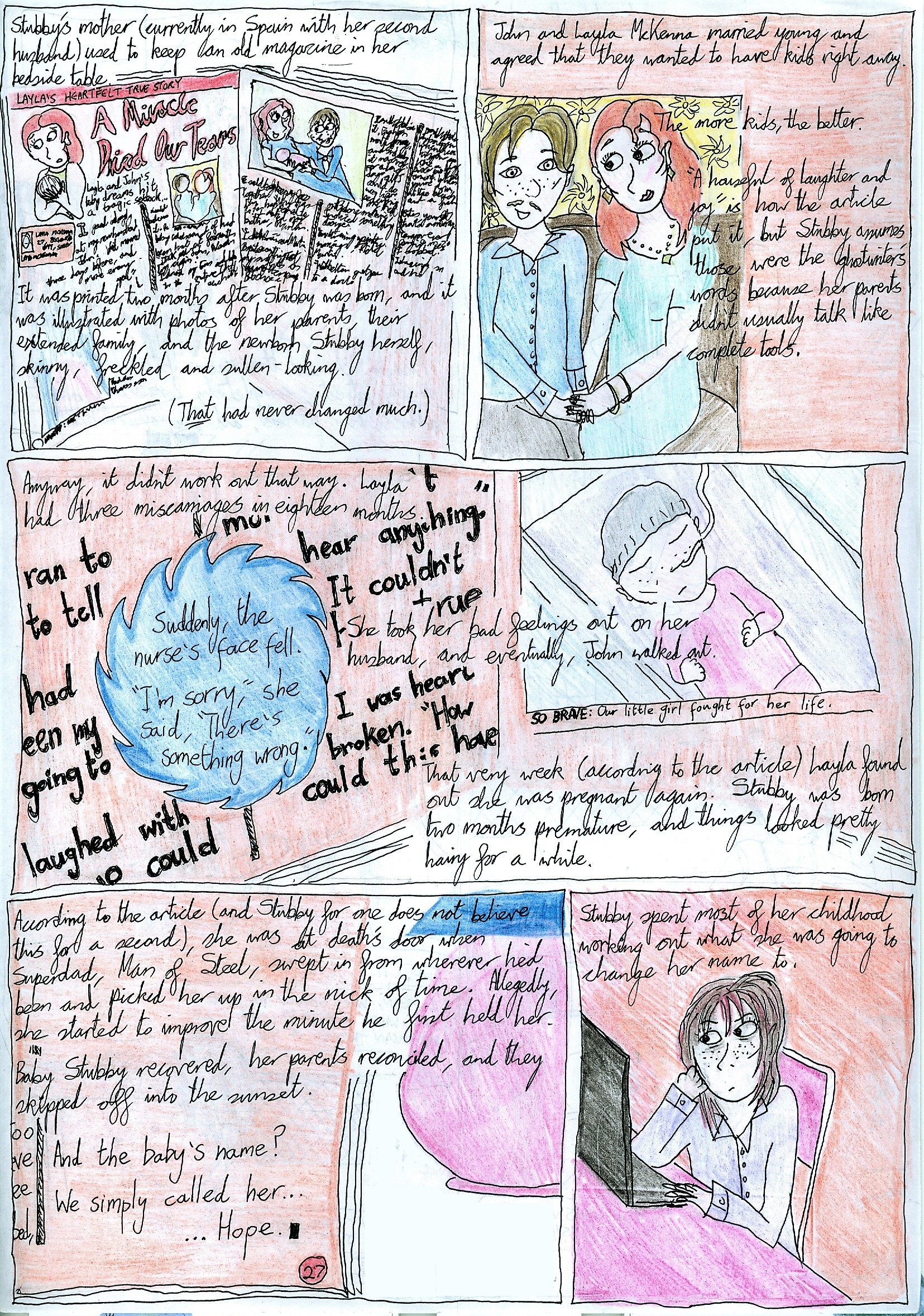
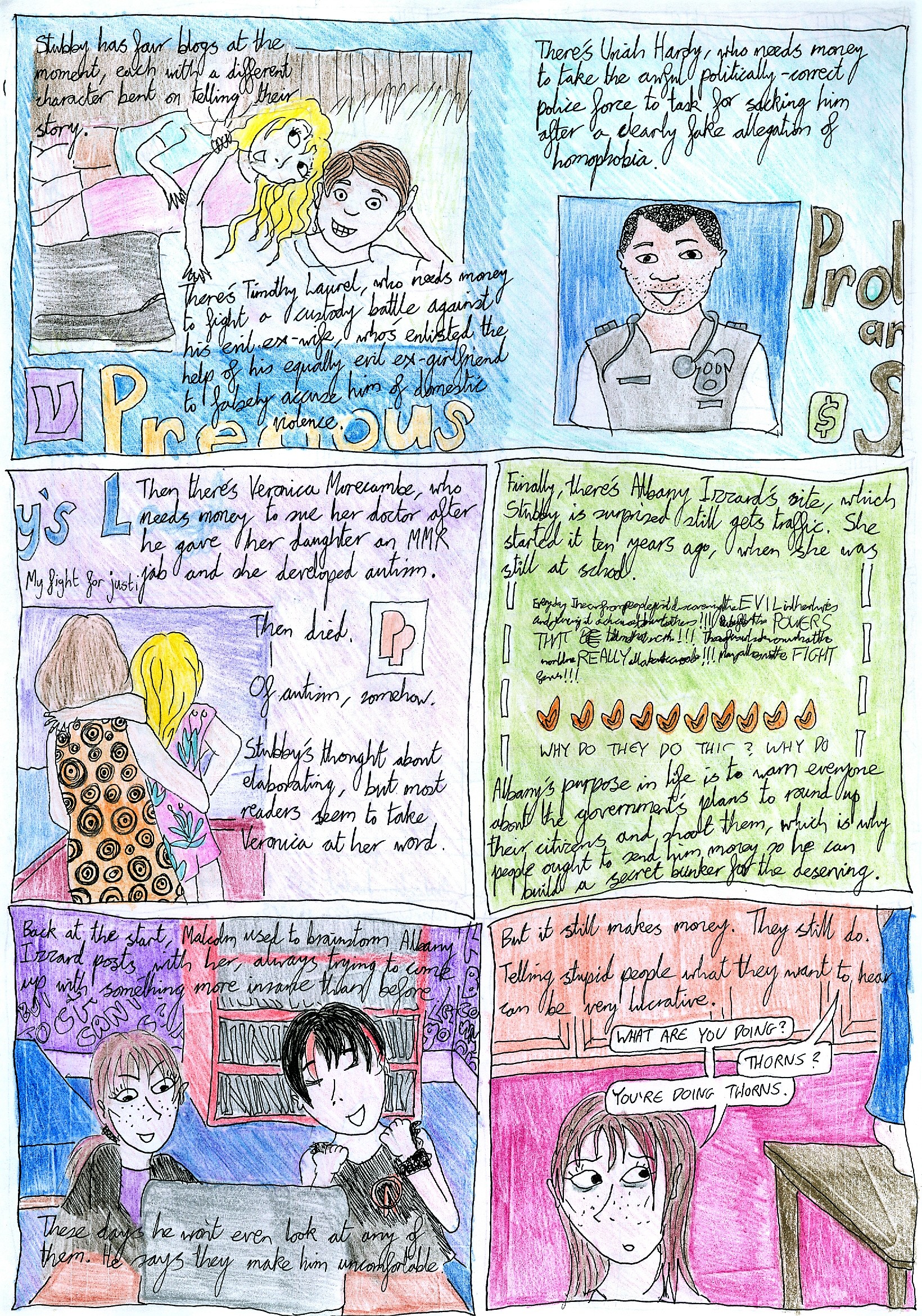
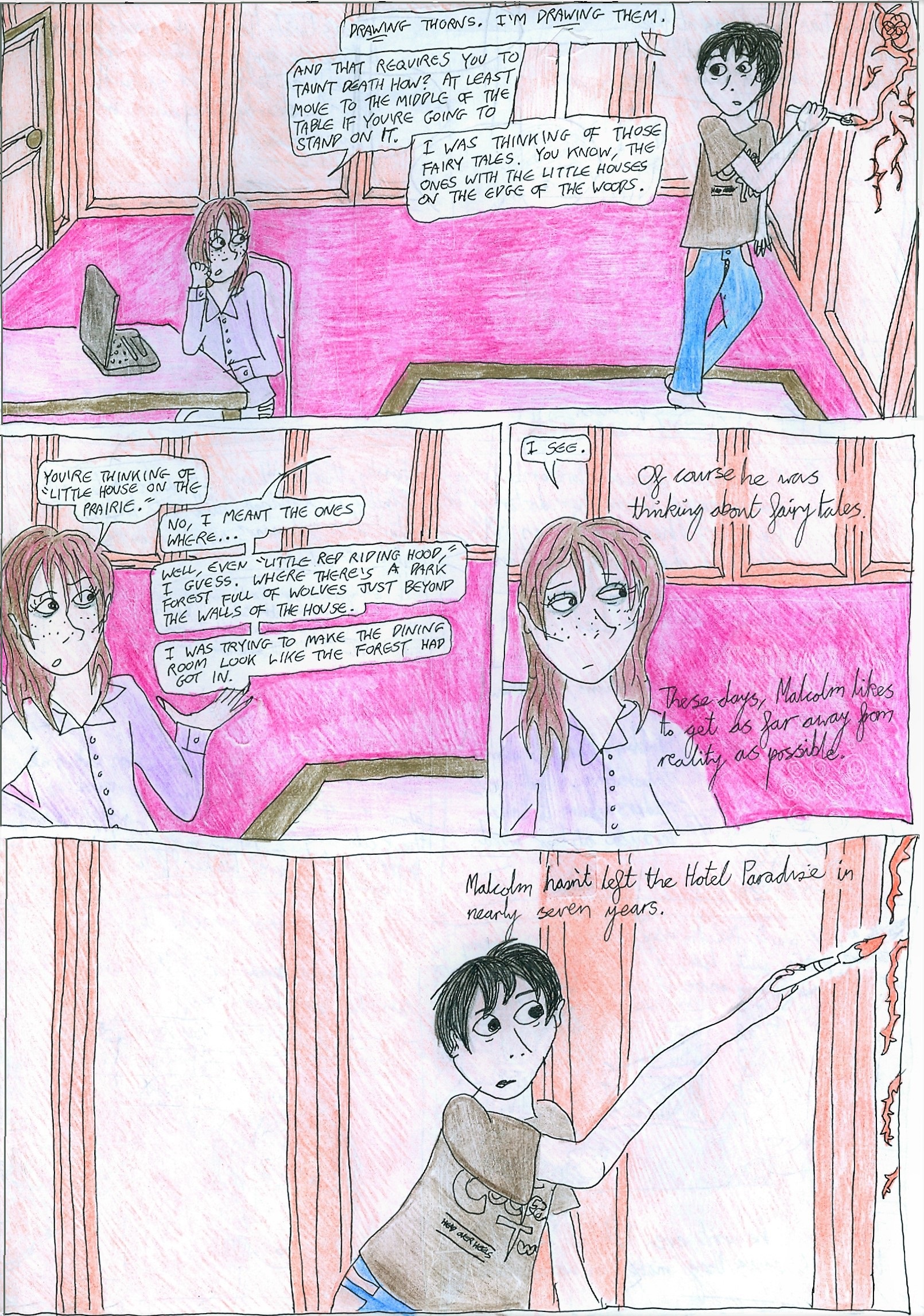
(Note: This draws heavily on the Brothers Grimm version.)
*
Once there was a girl who found herself locked in a dungeon and told to spin straw into gold, and all because her father had a big mouth. He’d always been prone to exaggerating, especially down at the pub, but this time some royal advisors were in town scouting out locations for the next hunting trip, and the next thing you know, word had got back to the king.
In that time and place, if you lived your entire life without the king noticing that you existed, you called it a win.
One morning, guards arrived at the family’s door, demanding the girl who could spin straw into gold. Her father insisted that it had just been an idle boast, but they had their orders. When he carried on trying to stop them, one of them knocked him to the ground and dragged the girl off while he was still finding his feet. For the rest of his life, he’d blame himself for what happened.
The girl was marched through the city and into the palace, where she stood before the king. “Is it true?” he demanded, “Can you spin straw into gold?”
The girl couldn’t very well say no. She didn’t want to think about what might happen to her father if she did.
The king had the guards take her to a room filled with straw, with a spinning wheel over in the corner. “Get to work now,” said the king, “Spin all night, and if by morning you have not spun this straw into gold, then you will have to die.” And they locked the door behind her.
For the first few minutes, the girl was frozen in panic. Should she look for a way to escape? Should she put the straw through the spinning wheel and pray for a miracle? Should she just lie down on the floor and accept her fate? Overwhelmed, the girl put her head in her hands and began to cry.
And then she heard a voice behind her.
At sunrise, the king had his guards unlock the room, and he was delighted to find piles of gold from floor to ceiling.
Just to keep the peasant girl on her toes, he had the guards check every corner for any leftover bits of straw, but he didn’t find any. So, naturally, that night he put the girl in an even bigger room, also packed with straw, and told her to spin it into gold if she valued her life.
Once the door was locked, the girl heard the voice again.
The king was happy beyond all measure when he saw that he now had two rooms full of gold. “You must do the same thing again tonight,” he told her, “If you succeed, you shall become my wife.” He laughed. “Even if you are a miller’s daughter, I will not find a richer wife in all the world!”
She laughed at his joke. She had to. He was the king.
The door was locked, the voice was heard, and the room was filled with gold. And the very next day, the king announced that he and the miller’s daughter were to be married within the month. The girl’s family weren’t invited to the wedding. It was thought that they would lower the tone.
She didn’t feel any safer now than she had when he’d locked her in the room and told her to spin. Every time she was alone with him, the words, Then you will have to die flashed through her head.
Within a year of her marriage, the new queen brought a beautiful child into the world. Not long after her son’s birth, she was sitting with him in the nursery when the door opened and a comical little man came in. She recognised him immediately, and sat bolt upright in alarm.
“Now give me that which you promised,” he told her.
The queen thought about it, and, after a long pause, nodded. “On one condition,” she said.
Over the next few years, the king searched every inch of the land for his missing wife and child. Back in the girl’s old village, her father tore himself apart with guilt and worry. But neither they nor anyone else would ever see her again.
The End
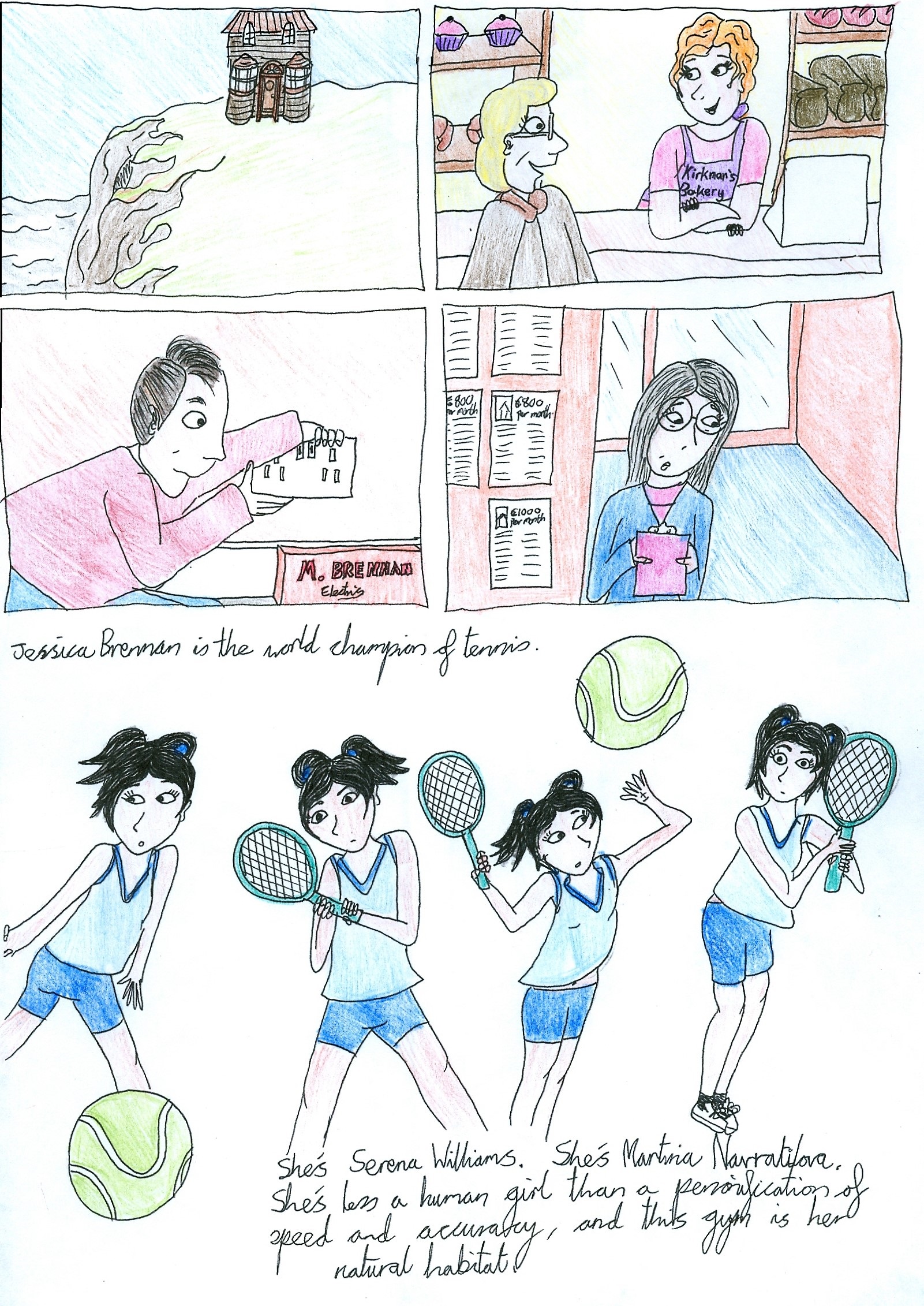
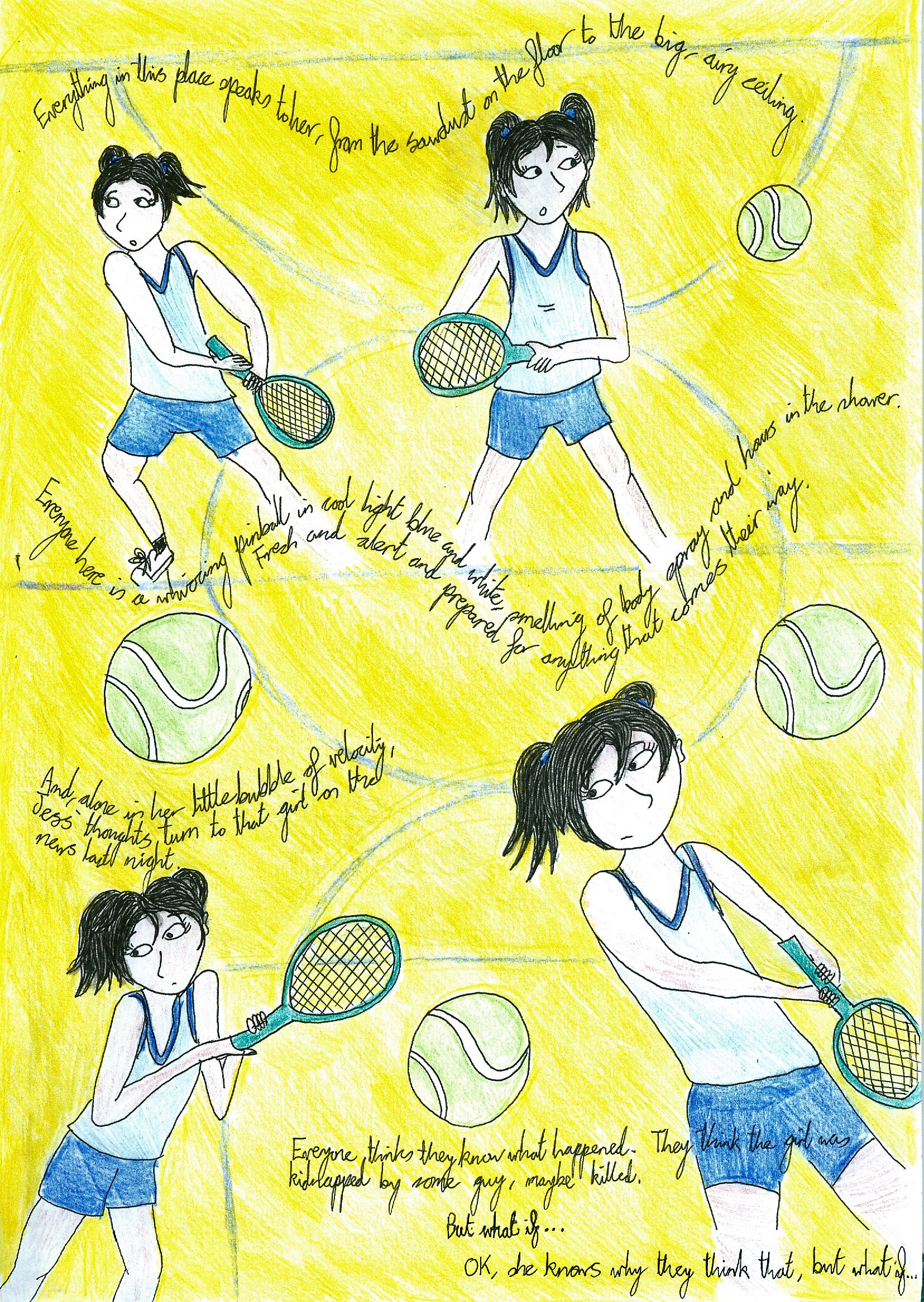

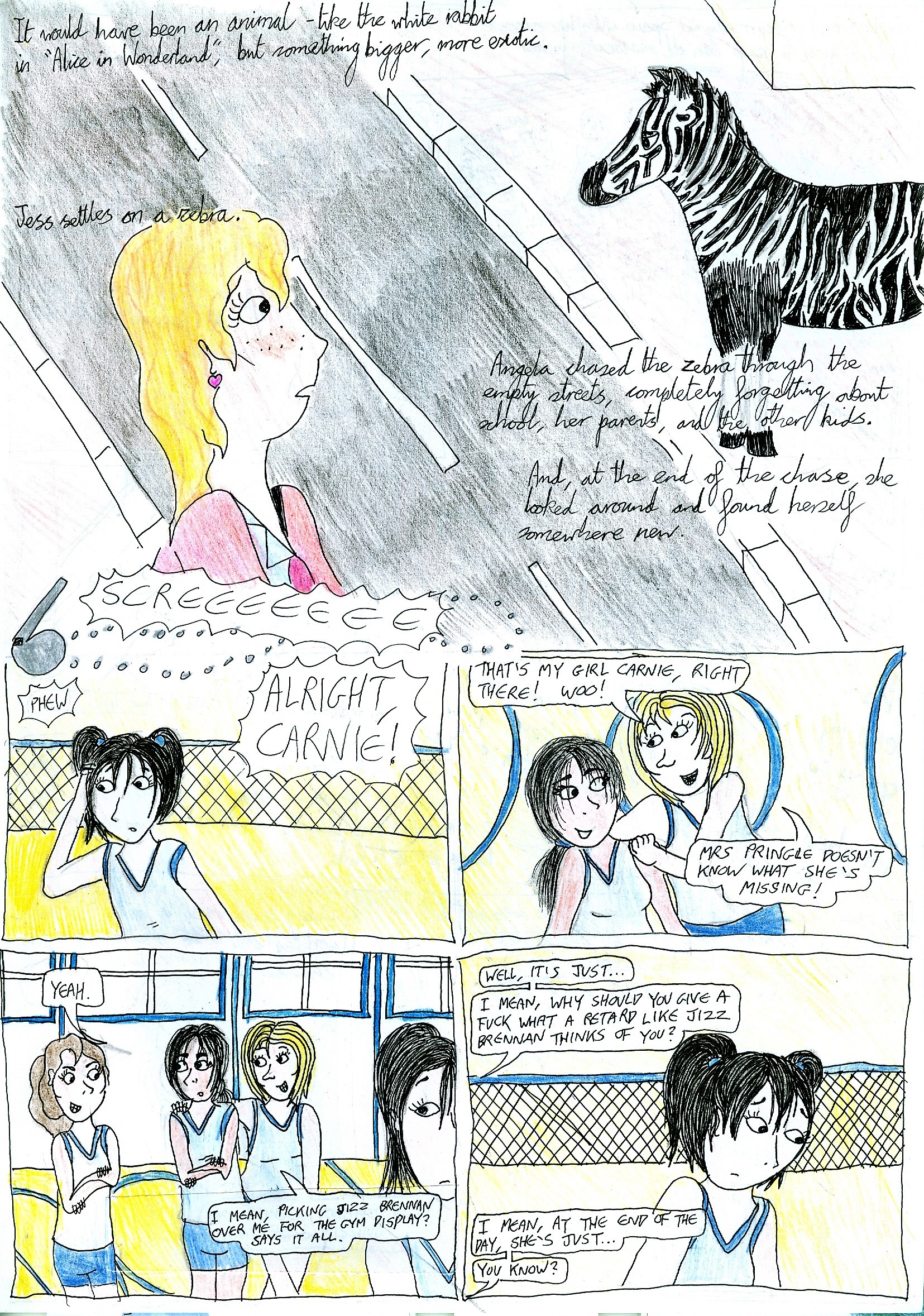
(After this chapter, there will be a month-long break from the Warbeck Sisters, so that I can figure out exactly how I want the rest of the story to go. Part eighteen will go up on Saturday the 27th of November. Until then, there’ll be other stuff.)
*
The cells were underground, slightly better-lit than the house itself, and carved out of rough, yellowish stone. Rube wondered if there had been a system of caves under the house when High Priest Tavin had moved there, or if he’d had to carve them out to make them. And if it was the second, then exactly how many people had he expected to lock up under his house?
It seemed to be empty at the moment, other than them. The soldiers had shoved them into the cell, locked the iron gates behind them, and then left them behind without so much as a, “Now sit here and think about what you’ve done.”
As soon as the soldiers were out of earshot, Kai piped up. Rube had almost forgotten he was there. “I could fly out and tell Sleet what’s happened. They might be able to help.”
Rube tried to look him in the eye, but couldn’t quite work out where his face was. “I thought you said Sleet couldn’t move between the different worlds, though?”
“They can’t. But they might have some ideas about how we can escape.”
It was funny that Kai had said “we,” when all he needed to do to escape was fly through the nearest window and take to the air. Rube looked at her sisters. “What do you think?”
Jeanette shrugged. “Sounds like a plan.”
Sally held out a hand, and Kai fluttered up to perch on it. “You’ll definitely be OK?” she asked, “I saw how hurt you were last night…”
“Well, I won’t have the Iridescences shooting arrows at me this time,” he replied, “I should be fine. By the time I get to neutral ground, I’ll be able to call a piper. Til then, I’ll just try not to strain myself.”
Sally’s forehead creased.
“I’ll be fine,” Kai promised.
Sally made a little uneasy noise. “Well… OK. But make sure you look after yourself.”
He nodded, and fluttered up to the barred window near the ceiling. “Be back before you know it,” he promised, and then he was gone.
That left Rube and her sisters alone in the cell, with nothing to do and no sound other than the breeze through the window and the rustling of their clothes when they shifted on the bench. Rube stared at the hallway beyond the railings, and wondered if she could avoid yelling out in shock when somebody eventually came to speak to them.
After a while, Sally asked, “You know that phone call you got from Dad?”
Rube briefly glanced at Jeanette, but then realised how little luck they were going to have trying to keep secrets in a cell eight feet across. So she just sighed and said, “Yes?”
“What was it about?”
“He was…” Rube wasn’t going to use the word ‘threatening,’ even if it was the only one that fit. “He said he was going to come here and take us back to his.” As soon as the words were out of her mouth, Rube cursed herself. Sally had wanted to go home since this whole trip started! She’d probably think that was a great idea!
But instead, she said, “Why didn’t you just tell him we had to go and rescue Colwyn?”
Jeanette answered before Rube could think of a reply. “He wouldn’t have believed us. And he wouldn’t have listened even if he had.” She shifted on the bench. “Remember when we were little, and Mum used to tell us, ‘I wants don’t get’? Well, I don’t think anyone ever said that to Dad.”
Rube didn’t have anything else to add. Jeanette had summed it up a lot better than she could have.
There had been a time, about five years ago, when they’d all been in Curry’s, looking for a new TV. Rube remembered it being a hot day, with giant fans whirring in every corner of the shop, and maybe that was why Dad had lost his temper so quickly. Because it had been quick- one moment, Mum and Dad had been calmly comparing one model to another, and the next, Dad had been bellowing like a howler monkey and accusing Mum of wanting to spend all his money on junk. Shop assistants had come by to tell him to calm down and stop scaring the other customers, but that hadn’t made any difference. In the end, Mum had quietly snuck out with Rube and the others while Dad had been distracted by the manager trying to stop him throwing something expensive,
Not long after that, Dad had moved out. Rube often wondered how Mum had managed to convince him that it was his idea.
There was a sound in the hallway, and they turned to see a person step into the hallway. (Rube didn’t make a noise. She was a little proud of herself for that.) It was a woman in the same sort of black dress as the one who’d answered the door- Rube wondered if it was some kind of staff uniform. The woman eyed the three of them as if they were a bunch of unpleasant bugs stuck to the window, and said, “The Lady Sameander has a job for you.”
“The Lady Sameander can kiss my arse,” snapped Jeanette, before Rube could say anything, “We’re having a conversation here.”
The woman’s eyes went wide, and she disappeared back down the corridor.
Rube looked at Jeanette and sighed.
“What?” asked Jeanette.
Honestly, Rube wasn’t sure what. If they’d kept the woman talking, they might have found out some information about this place that could have helped them come up with an escape plan, but, at the sane time, Jeanette hadn’t been wrong to say what she had. The Lady Sameander, whoever she was, could kiss their arses.
Still, she felt she had to say something. “Next time someone comes by, let me do the talking, alright?”
(To be continued, a month from now)
The soldiers- if that’s what they were- took them up a set of neatly-paved paths tp the top of the nearest hill. They seemed to be heading towards a building in the distance, a big farmhouse made out of brown bricks and wood.
Kai sat in Sally’s ear and whispered. “So, I just realised I haven’t talked in front of them yet. They probably think I’m a pet, if they’ve noticed me at all.”
“Right,” whispered Sally. She was glad he was there. Her chest was beginning to feel tight.
“Don’t mention me until we work out what the situation is, yeah? You might need me as a secret weapon.”
“Do you think this lot are working for the Iridescences?”
She felt Kai shake his head. “No. You’d know them if you saw them. This lot are from somewhere else.”
Which meant they had no idea what was going on. Which meant anything could happen, no matter how terrible.
They reached the house. Close-up, even the windows looked brown. The rest of the group stopped while the soldier in the lead (the one who’d spoken earlier) walked up the driveway and knocked on the door.
A woman in a black dress answered. She had the same golden hair and white skin as the soldiers. “Yes?”
“We need to see High Priest Tavin,” the soldier told her.
She closed the door, and for a couple of minutes, nothing happened. Sally looked around at the driveway. It was surrounded by a short brick wall (brown bricks) with heathery bushes on top that blocked it from anyone standing outside. Sally wondered what it was for. Did they have cars here, or horses?
And are we going to live long enough to find out? she tried not to think,
The door opened again. “High Priest Tavin would see you in the board room. Follow me.” The woman in the black dress walked off down the hall, and the soldiers pushed Sally and her sisters to follow.
It was dark in there. There were no windows, just little blue lights on the walls that looked a bit like weird candles. There was a dusty, sandy smell as they walked through the hallway, but Sally couldn’t see anything.
They ended up in a big room that wasn’t much better lit than the hallway. Sally thought it looked a bit like a library, but she couldn’t be sure. A man (with curly blond hair and pale skin) sat at a desk, while another man (ditto) stood around in fancy riding clothes, trying to look important.
The head soldier bowed his head to the riding-clothes guy. “High Priest. We picked up these trespassers around the fringes.”
The High Priest didn’t respond to this. He just gave Sally and her sisters a dirty look and said, “State your names.”
Rube cleared her throat. “I’m Ruby Warbeck, and Sally and Jeanette are my sisters. We’re in…”
“And what are you doing in Kindling Grove?”
We have a name! thought Sally, and almost burst out laughing with sheer nervousness.
If she had, it might have distracted Rube from how nervous she was. “Well, um… Do you know Colwyn Ballantine? He’s our uncle, and he’s been…”
The High Priest snorted. “Oh, this is a mission in the name of Dovecote Gardens, is it?”
Rube didn’t seem to know what to make of that. “Um… I guess? He’s been…”
“Dovecote Gardens.” He made a noise with his teeth. “I have the greatest respect for the owners of Dovecote Gardens.”
Sally relaxed a bit.
“They were noble. And wise. And completely lost to history.”
Rube made a funny, wounded noise. “What do you mean?”
“Don’t try to tell me you’re from Dovecote Gardens.” He took a couple of steps towards Rube so he could stand over her threateningly. “You may have been there, but you’ll never understand it.”
“OK, but…”
The guy writing at the desk tutted, and turned to the High Priest. “I hate it when chancers come through here claiming to be the owners. I bet if the real owners could see some of the people claiming to be them now, they’d be horrified.”
The High Priest gave him a quick nod, and turned back to Rube. “I just need to look into your eyes, and I can tell. Dull,” he pronounced. And he turned to the lead soldier. “Take them to the cells.”
(To be continued)
I originally planned to put this up on Kindle, but decided to put it here and on DeviantArt instead. And if you remember the “Tales of the Amber” that I used to put up a few years ago, this is related to that (but I changed her name to Jessica).