


(The following article originally appeared on the Women Make Waves website in September 2014. Since Women Make Waves is no longer in business and the archives are more difficult to access as a result, I thought I’d collect a few of my articles here, for easy reference.)
(P.S. Sorry about the paragraphing. I’m not sure how to fix it.)
If you Google the words “the worst song of all time”, you’ll generally get a string of irritating novelty hits. You’ll get “Agadoo”, you’ll get “The Birdie Song”, you’ll get “Can’t Touch This”, and so on. And while there’s the occasional surprising result (seriously, “Ob-La-Di, Ob-La-Da” isn’t even the worst Beatles song), by and large, you get a selection of songs that are, when all is said and done, a big joke. Songs that were funny the first time, but made everybody want to stick forks in their eyes by the seventy-fourth. It’s pop culture’s revenge- for the crime of tormenting our elders by singing Aqua over and over again, we in our turn will be tormented by the younger generation singing “What Does The Fox Say?” over and over again. It’s tough but it’s fair.
But here’s a funny thing- deep down, where it counts, none of those songs truly deserve our hatred.
No, really. They deserve our annoyance, and they deserve our disdain, but actual, genuine hatred is something different. The songs mentioned above are, basically, harmless. MC Hammer, Black Lace and the others set out to make disposable pop hits, and disposable pop hits are what they made. Besides, you only have so much hate to go round- if you waste it on a band with lyrics like, “Come on Barbie, let’s go party,” you’ll have none left over for Hitler.
But what about a band with more ambition like that? What about a band who want to teach their audience a valuable life lesson? What about a band who decide to write a song with an important social message? And what about a band who completely mishandle that message, so that their song comes out as a pile of clueless, sexist, victim-blamey tripe?
Gentle readers, I give you City High’s “What Would You Do?”
I hate this song. I hate it with the power of a thousand suns. I hate it with a passion that, to be honest, is probably a little out of proportion considering that it’s a thirteen-year-old song by a band who split up soon after its release. But it still exists. Every time I think I’ve forgotten about it, it suddenly comes on the radio and makes me want to kill things.
Although it was released in 2001, “What Would You Do?” has always made me think of the 1980s slogan “on yer bike.” The origin of this phrase was a comment made by the Conservative MP Norman Tebbit, in the aftermath of unemployment riots in the summer of 1981. In criticising the behaviour of the rioters, Tebbit said, “I grew up in the Thirties with an unemployed father. He didn’t riot. He got on his bike and looked for work, and he kept looking ’til he found it.” Many people interpreted this as Tebbit telling the unemployed to look for work like his father did instead of complaining. Some considered this sensible advice, and adopted “on yer bike!” as a tough, no-nonsense slogan. Others responded, “Go out and look for work? Wow, what a brilliant idea- I’d never have thought of that on my own! And I certainly haven’t been doing exactly that for the last year, you insensitive bell-end!”
But the thing that jumps out at me is this- Norman Tebbit only felt he could imply what City High, twenty years later, directly stated in this song. And I think we can all agree that when an up-and-coming R&B group are less sensitive to the plight of the disadvantaged than a right-wing politician in the 1980s, something’s gone horribly wrong.
The song begins with our narrator at a wild party with plenty of booze and strippers. Please note that he went there of his own free will, and there is nothing in the lyrics or video for this song to indicate that he isn’t enjoying himself. Remember this- it will be important later.
The narrator notices that one of the strippers is a girl named Lonnie who went to school with him, so he drags her outside and demands that she explain herself. Instead of punching him in the face and stealing his wallet, Lonnie explains that she works as a stripper (and occasional prostitute) because it’s the only way she can feed her son. I’ll pause here to point out what we’ve just learned about the narrator: He objects to his old friend being a stripper, but he doesn’t see anything wrong with himself or his friends paying to be entertained by strippers. It’s alright for them to want a particular service and enjoy it when it becomes available, but wrong for Lonnie to provide it.
There are several terms for men who think like that, but the only one I can repeat in polite company is “gigantic hypocrite.”
Admittedly, you could take a more charitable view of his character and argue that he has no particular moral objection to stripping, but he remembers Lonnie as a clever girl and is surprised and disappointed that she hasn’t done more with her life. You could argue that I’d be just as surprised if I saw an old schoolfriend working in Mcdonalds when I knew she’d got A*s on all her A-levels. And I can’t deny that. But the difference is this- if I did see a genius friend working in Mcdonalds, I’d arrange to take her out for a drink and catch up on what had happened over the years, then broach the subject of her career choice politely. I wouldn’t drag her outside and demand that she justify her life to someone she hasn’t spoken to in years.
At the start of the second verse, the narrator once again fails to endear himself to me by telling Lonnie that her need to support her son is “no excuse” for her behaviour. You know, I don’t think I’ll be satisfied with her stealing his wallet anymore. At this point, it’ll pretty much have to be his kidney.
It’s that word “excuse” that gets to me- the sheer presumption on the part of the narrator that she has to excuse her method of supporting her son to someone who is essentially a complete stranger. He’s basically Angel Clare from Tess of the D’Urbervilles– a complacent man alternately taking the sexual favours that women offer him, and demanding that they explain to him exactly why this doesn’t make them massive sluts.
Instead of going with my kidney idea, Lonnie rants at the narrator, telling him, “Every day I wake up, hoping to die.” She doesn’t add, “And if I’d known I was going to run into a sanctimonious twerp like you today, I’d have wished a lot harder,” but I think it’s implied. She then tells him that she and her sister ran away from home to escape their father’s sexual abuse, before concluding, “Before I was a teenager/ I been through more shit that you can’t even relate to.” The narrator never shows any sign that he, in fact, can relate to her life, but he doesn’t let this get in the way of telling her that she’s doing it wrong.
The music video then cuts back to the narrator telling his friends the story. The music stops as one of them interrupts with, “What’s stopping (Lonnie) from going out and getting a real job?”
Well, I’d like to ask him by what standards being a stripper isn’t a real job (it requires real hours and pays real money, doesn’t it?), but otherwise he asks a valid question. There could be a number of factors- it might be that the economy’s in the toilet and the strip club’s the only place hiring; it might be that there are other jobs going, but the pay isn’t as good, or they require qualifications and experience she doesn’t have, or the hours aren’t compatible with childrearing; it might be that she lacks the motivation to look for a job, possibly because she’s clinically depressed (the “every day I wake up hoping to die” line certainly suggests this)…
“What would you do? / Get up on my feet and stop making up tired excuses”
Oh, who am I kidding? It’s because she’s lazy, obviously!
Fortunately, this part of the song isn’t spoken directly to Lonnie, which means that she’s not going to have to listen to any more pseudo-moralistic garbage, which I imagine is a relief. No, this is just something that the narrator’s friend would say to Lonnie if, hypothetically, he met her. Which he’s not going to. So it’s just the audience that has to suffer as he tells us exactly what he’d do if he was in this situation that he’s never been in and never will be in, but knows, instinctively, that he’d handle a lot better than this stupid, lazy woman.
Before we come to the general theme of this song, there is a very odd line in the final verse that I think is worth addressing: “Girl, I know if my mother can do it, baby you can do it.” Since this is the only mention of his mother, and he doesn’t elaborate or attempt to explain whether or not her situation was even remotely similar to Lonnie’s, all this line achieves is adding a creepy Madonna / whore vibe that, frankly, fits right in with the “It’s OK for me to watch strippers unless one of them is somebody I know personally, in which case it’s an affront to my morals” attitude we saw in the first verse.
This song has not one, but two, highly questionable morals. We’ll start with the horrifically sexist one, then go on to the horrifically classist one.
Moral the First: If you’re a stripper or a prostitute, you should give it up. Not because of any practical or moral reservations that you yourself might have, but because it might make a man disapprove of you.
And we can’t have that. Everyone knows that a woman must devote her life to the good opinion of males everywhere. There are many times and places in which boys are told that all women are either bad girls (who you sleep with and then dump) or good girls (who are human beings), and the first verse comes across as the narrator telling Lonnie off for blurring the line and making his head hurt. And in the final verse, the line “stop making up tired excuses” carries the disturbing implication that Lonnie should have let her son starve to death before she allowed herself to become sexually impure.
Moral the Second: If you know somebody who does something dangerous or morally questionable to support her children, it’s not because of complicated factors like a hostile job market or lack of financial support from the government or her children’s father. It’s because she’s lazy!
See also, “I’m not paying tax to support a bunch of people on the dole who can’t be bothered to get jobs!” Some people badly need to believe that the reason they’re better off than poor people isn’t that they’re luckier, but that they’re inherently better people. If they were in the poor people’s shoes, they tell themselves, they wouldn’t sit around all day watching TV and eating crisps, or whatever it is that poor people do. No, they’d go out and achieve, and earn a million pounds within a week. Because they’re better people, and that’s why they’re rich.
This is an very convenient philosophy for rich people to have. It means that they don’t have to give money to charity (because it would only go to lazy people), and they don’t have to feel guilty about blowing large amounts of it on frivolous things (because if the lazy people had money, they’d spend it on something even more frivolous). Take it far enough, and you can live a life of unbridled hedonism without even a twinge of conscience… always assuming that nothing unforeseen happens to your money.
In City High’s defence, I think they intended “What Would You Do?” to be an empowering song, telling struggling single mothers that they didn’t have to resort to jobs in the sex industry to feed their children. The trouble is that they didn’t bother to come up with any actual alternatives. If this song had ended with the narrator giving Lonnie some advice on where to look for a job, or telling her he’d see if he could get her an interview where he worked, I wouldn’t have half the problem with it that I do. But all they could offer, after two verses of smug, judgemental hectoring, were some vague platitudes about “getting up on your feet.”
Or, if you prefer, “on yer bike.”
Monday Night- Aunt Joanie
In Year Four, Sandy’s class had done a topic on Ancient Greece, and Sandy had read the big illustrated book about the gods and goddesses and mythical creatures about fifty times. The picture of Athene, the goddess of war and wisdom (grey-eyed, troubled-looking and surrounded by owls) had always made her think of Aunt Caroline, which was weird, because two pages later there was a picture of Demeter, the goddess of the harvest, with her long golden curls, magnificent bosom, and expression of inner peace. That picture had always made Sandy think of Caroline’s sister, Aunt Joanie.
Actually, Joanie wouldn’t have made a bad goddess of the harvest. She lived out in the country, in a little cottage just on the edge of a farm, and she kept a flock of fat, moody-looking chickens in a run just by her back door. At mealtimes, when she wasn’t just cooking the chickens’ eggs, she’d make weird concoctions out of the fruits and berries she picked in the woods. These usually tasted more of the spices in the back of Joanie’s cupboard than anything else, but Sandy had to give her points for being resourceful.
Over dinner (an apple-and-blackberry pie with plenty of cinnamon), Sandy told Joanie how things were going at school. She told her how she’d given up answering questions in French lessons, because every time she did, Mr Marshall (who thought he was a comedian) insisted on singing, “Sandy, baby, I am feeling blue!” and that got really annoying after the third or fourth time. Joanie said to tell him that she wasn’t named after Sandy from Grease, anyway- she was named after Sandy from The Prime of Miss Jean Brodie, which had been her mother, Tamsin’s, favourite book. That Sandy was a lot smarter and more ruthless than the one from Grease, although less likely to sing catchy 50s-style songs, which was a bit of a drawback.
Sandy told her about the girl who sat next to her in Maths, who’d lost her calculator and tried to convince Sandy to give her hers, on the grounds that they didn’t know for sure which one had been lost. Joanie told Sandy that Bible story about the Wisdom of Solomon, although she admitted that trying it out in this case would probably just get them both detention for getting broken calculator parts all over the classroom.
Sandy told her about the “Everyday Technology” video they’d had to watch in IT, and how angry her friend Amy had been that the dad in it had got to use various bits of technology at work, but the mum had just scanned her credit card at the supermarket and then been picked up by a speed camera. Joanie told her about her Year Eight and Nine Geography teacher, who’d always spent the first ten minutes of the lesson screaming her lungs out at the class for not coming in quietly enough. At first, Joanie had found this upsetting, but then she’d worked out that it meant every time she had Geography, she could bring in a CD player and listen to exactly three songs she liked without being caught. For two whole years, she’d got away with it- the teacher was always too busy venting her spleen to notice.
“You know, Sandy, one of the biggest lies adults tell children is that they know what they’re doing,” said Joanie, finishing off her drink, “And we all do it. Even if it’s just because we want you to feel safe.”
Sandy smiled. “One of the biggest lies?” If Joanie was spilling sinister adult secrets, Sandy wanted to hear as many as possible.
“Oh, yeah. Right up there with Santa and the Tooth Fairy.”
Sandy remembered being eight, losing a tooth, putting it under her pillow, and pretending to be asleep when her granddad had snuck into the room. “And then, the next morning, when he found out I’d seen him, he still tried to tell me it had been the tooth fairy who’d left the money,” she told Joanie, “He said, You must have fallen asleep after I left the room and missed her.”
Joanie laughed heartily. “Do you want to help me with the washing-up?”
Sandy didn’t want to help her with the washing-up, but she knew that saying so wouldn’t get her anywhere, so she said yes. She ended up doing the drying, while Joanie fiddled with the taps and cursed her unreliable boiler. “I’m lucky to get two minutes of warm water in the shower every morning,” she said, looking forlornly at the stubborn sticky stains in the middle of the plate she was holding. “And as for central heating, forget it. Those radiators have never once been more than lukewarm since I moved in here.”
Sandy made a sympathetic noise, and thought about what she’d done with Gran’s plant on Friday afternoon. She didn’t know if she might be able to do the same thing with Joanie’s pipes, or if it only worked on living things. Probably worth a try, anyway.
“And you know the worst thing?” Joanie continued, “Every time Caroline visits, she finds something wrong. She barely even has to say anything- she just gives me that sad, long-suffering look that…” Joanie let out a huff of breath, and shook her hands in the air, calming herself down. “Oh, I shouldn’t complain. She only wants to help. But God, does she interfere…”
“It’s a big sister thing,” said Sandy, as if she knew anything about that. After all, Roma was Keeley’s big sister, and she definitely wasn’t interested in interfering in her life. Or acknowledging her existence, if she could help it.
“I know, I know.” Joanie started to pick the dried fruit juice off the plate with her fingernails. “I guess if someone knew you as a little kid, they have trouble remembering that you’re not anymore.” She looked up at Sandy and smiled. “I know I can’t quite believe you’re in Year Eight already.”
Sandy laughed.
“Jesus, it seems like the day before yesterday that I picked you up from playgroup every Thursday and took you to see the animals.”
“Yeah,” said Sandy, “It was nice of them to put up with me all those times. You know, the people who run the farm.” As soon as Aunt Joanie turned away, she reached towards a cold little water droplet on the handle of one of the mugs. There was something she wanted to try out.
“Nah, they were glad to have you. I think they were hoping I’d let them train you up, so you’d be like those three-year-olds who can deliver lambs.”
There was a little spark, like a static shock, from Sandy’s finger. And then the water droplet was gone, leaving behind a little wisp of steam.
“Some farmers say they can do that better than adults, you know,” Joanie continued, still scratching at the same plate, “Little hands, see? They can reach in and make sure the lamb’s pointing the right way.”
Sandy smiled. “Thanks for not making me deliver a lamb.”
“Hey, don’t thank me yet- I might still do it.” She put the plate back in the basin, and added some more hot water. “You’re going to want an after-school job one of these days, you know.”
Sandy looked at the mug, where the droplet had been, and at the water in the basin, full of congealing dishes. “Do you want to swap?”
“Nah, that’s OK. I think I can get these taps to behave now.” She turned on the hot water again, and gave a satisfied nod when a little bit of steam rose from the sink. “It’s just a matter of letting them know who’s boss.”
Sandy nodded, and carried on drying.
“They’ve still got Lady,” said Joanie, handing her a clean plate, “You know, the shire horse?”
“I was terrified of her!” Sandy remembered a furry white mountain with massive hooves, whose neigh had always sounded more like a growl. “I kept thinking she was going to trample me to death!”
Joanie smiled ruefully. “Yeah, maybe you were a bit too young to be introduced to her. She’s a perfectly nice horse, but, you know, those hooves…”
“They looked like they were made out of rock.”
“I’m glad you were so safety-conscious. Not many four-year-olds know to be careful around horses.”
Sandy gave an exaggerated shudder. “Demon horse,” she mumbled. Her gaze settled on the radiator in the corner, and she wondered what she could do if she got the chance to be alone with it.


(Note- My spellcheck recognises “Keeley,” but not “Fredo.” It’s very uncultured.)
Sunday Night- Cousin Keeley and Cousin Roma
Aunt Bernie had named her daughters, Roma and Keeley, in honour of the places where they’d been conceived. Gran said that this was a pretentious thing to do, to which Bernie usually replied that at least she hadn’t given her oldest daughter a boy’s name like some mothers she could mention. (And then Gran would say that Bernie was actually a very common girl’s name in Ireland, and Bernie would say that they weren’t in Ireland, were they, and Gran would go on a tirade about how children were never grateful for the sacrifices their parents made for them, and then Sandy would get tired of listening in and go off to do something else.)
This evening, Sandy had gone out to help Keeley and Roma walk their dogs. Keeley, who was two and a half years older than Sandy but didn’t look it (or act it, most of the time), walked beside her, swinging the end of the lead from side to side, while Roma, who Keeley had been winding up all afternoon, strode out two yards ahead of them, glowering. Meanwhile, Sonny and Fredo (the springer spaniels) bounded around their ankles, gazing up at them in adoration.
“Sandy, Roma doesn’t love me anymore,” said Keeley mournfully. She was the same height as Sandy and wore similar round Penny Crayon glasses, so, from a distance, you could only really tell them apart by the hair (Keeley’s was brown and Sandy’s was red.) “We no longer share a deep, self-sacrificing sisterly bond like in ‘Goblin Market’.”
Roma, currently visible only as a head of dark curls at the top of a long black coat, hunched her shoulders and walked faster.
Keeley did her best to close the distance. “Roma, I’m sorry I said your boyfriend looked like a serial killer.”
“You are really annoying me now,” said Roma, without turning around.
“While we’re on the subject, I’m also sorry that your boyfriend looks like a serial killer.”
Roma let out a sound a bit like a kettle coming to the boil, and strode ahead, tugging Sonny’s lead (not that he needed much encouragement to race ahead), until she reached the side gates and left the park.
Keeley, not sorry at all, turned back to Sandy. “It’s the hair that does it. Never trust a man with a bowl cut, that’s what I say.”
“You shouldn’t tease her like that,” said Sandy- a little uncertainly, because she had been enjoying it. She was never sure whose side to take when Keeley and Roma fell out. Whichever one she picked, she always ended up feeling bad about the other one.
“Well, if she will go out with serial killers…” At this point, Fredo was straining at his head in an attempt to drag them out of the park and see what his brother was up to, so Sandy and Keeley obeyed.
They caught up with Roma outside the newsagent on the corner, where she was waiting with Sonny. As soon as she saw Keeley, she shoved the end of the lead into her hand. “Mum said to pick up some bread and milk. You stay outside with the dogs.”
Keeley turned round, a big smile on her face. “Hear that, Sandy? Mum said to pick up some bread and milk. You stay outside with the dogs.” And she presented Sandy with both leads.
“I wasn’t talking to Sandy!” snapped Roma.
“It’s OK,” said Sandy, taking the leads in her hand, “I don’t mind looking after them.” As soon as Keeley had given her the leads, both dogs had fixed her with a look of sheer, worshipful love. It was nice to be wanted.
Roma threw up her hands, in the same way that Gran did sometimes. “Fine,” she muttered, and went into the newsagent. Keeley followed her, hopefully not to carry on taunting her about the serial-killer-boyfriend thing. Stuff like that only stayed funny for a little while.
Sandy crouched down to scratch the dogs behind their ears. And at some point in between standing and crouching, the old woman appeared at her side.
The old lady was taller than Sandy, but not by much. She had a rough, leathery face, and straggly grey hair that reached her shoulders. She wore a long brown coat, and carried two overloaded shopping bags. Sandy had never seen her before in her life.
“Sandy, isn’t it?” said the old lady with a grin.
Sandy straightened up, her grip tightening on the dogs’ leads, as if she thought the old lady was going to try and steal them. “Um…”
“Alexandra Faith Buckland, if you want to be formal.” The old lady grinned wider. Her teeth were so yellow that they almost looked orange. “Am I right?”
Sandy looked up at the clouds, which had gone slightly grey but didn’t look exactly threatening yet. Beside her, Sonny let out a low growl. “Are you a friend of my gran’s?” she asked, but she knew that couldn’t be it even as she said it. She knew all her gran’s friends. There weren’t that many.
The old lady chuckled. “I’m a friend of yours, Alexandra Faith. Or I can be.” She lifted her hand up, and stroked her chin thoughtfully. The nail on her thumb looked a lot longer and sharper than any of the others. “I heard about what happened yesterday, you see. At the fete.”
Sandy thought about the man who’d yelled at Aunt Caroline, his mouth opening and closing like a goldfish. Almost without meaning to, she looked up at the clouds again.
“It’s a mistake to draw too much attention to yourself,” said the old lady. The dogs were both growling now. Maybe that was why she hadn’t come any closer. “I don’t think you quite know what you’re dealing with. But you will.”
Sandy looked at the clouds. They were greyer now. There seemed to be more of them. I don’t want to be here. Come on, come on…
The old lady gave another tight grin. “I need to know what you are. Before I decide what to do with you.”
And then, in a split-second, the hail started. It burst out of the sky as if the clouds had been straining to hold it in all this time. The old lady looked around, aghast, as the hailstones clattered and bounced off the pavement around them. Before she had a chance to gather her thoughts and say anything, Keeley ran out of the newsagents.
“Quick!” she said with a laugh, and took Sandy’s arm. “Let’s get these dogs home!” And the two of them ran up the road towards the house.
After a minute or two, the hail began to ease off, and Sandy had a chance to look behind her. No sign of the old lady. She must have run off to find shelter, too.
“Roma sent me,” Keeley explained, “She said that it only took one person to buy bread and milk, and it wasn’t polite to leave our guests to freeze to death.” She looked around happily, surveying the damage that the mini-hailstorm had caused. If there was one thing Keeley liked, it was a little bit of chaos.
“Hmm. Thanks for that,” said Sandy, clutching Sonny’s lead as tightly as she could. She knew she wouldn’t feel completely safe until they’d got to Aunt Bernie’s house and locked the door behind them, but she was glad the dogs were there, anyway. And she was glad she was with Keeley, too. She wasn’t big or scary-looking enough to act as a bodyguard, but she was a bit older, at least, so she might know a thing or two that could help in a dangerous situation. And it was a million times better than being alone.
“I think she was just looking for an excuse to get rid of me, personally,” said Keeley, as they turned into their street. She fished the front door key out of her coat pocket and started twirling the keyring around on her finger. “Sending her little sister out into the snow… Disgraceful.”
“It wasn’t snow,” said Sandy. She wondered if she could have managed that.
“Pfft. No-one likes a pedant, Sandy.” And Keeley walked up the garden path and unlocked the door.
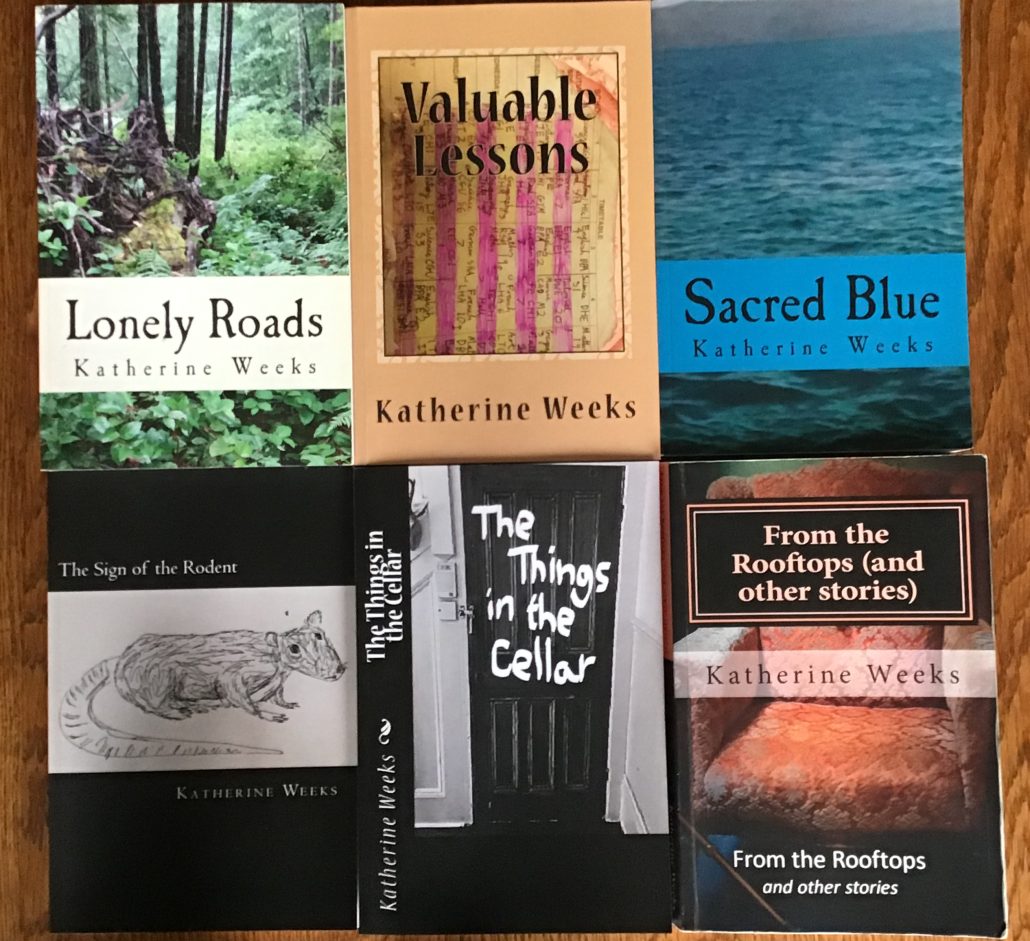
Due to circumstances that I really, really should have seen coming, “From The Rooftops” will be released somewhat later than planned. This is rather annoying from my point of view, because I had this grand plan to release all five books by my thirtieth birthday (i.e.- today), but, well, an intensive four-week CELTA course is a harsh mistress. It’ll go up sometime later this week, promise.
Saturday Night- Aunt Caroline and Uncle Anthony
The school fete was crowded, but Aunt Caroline moved through it in her own bubble, with the crowds parting as she came towards them. Like she was a queen. Like she was Queen Caroline who washed her nose in turpentine.
Aunt Caroline was the lady mayoress of Starling Moor. (Once, one of Grandad’s friends had said that actually, these days, female mayors were just called “mayors,” but Gran had replied, “No, trust me- in Caroline’s case, it’s ‘lady mayoress.’ She’s a special case.”) She’d had that job for five years, and she’d worked for the previous mayor for ten years before that (since way before Sandy had been born, in other words). Before that, she’d been a policewoman, but she’d left after a few years. Gran said that this was because Caroline preferred to boss people about without getting her hands dirty.
Caroline took small steps, her high heels clicking against the tarmac. Beside her, in the middle of the bubble, were Sandy, Uncle Anthony, and two blokes she worked with, one holding a clipboard and the other doing his best to look imposing. Sandy had her hair tied back neatly, and she was wearing a spotless white blouse and tartan skirt. Caroline and Anthony had told her that she didn’t have to dress up, but when Caroline was around, you really did, otherwise you’d look like a street urchin in comparison.
Caroline turned to Sandy. “I may need to leave in about an hour, but you and Anthony can stay. I’ll meet you back at the house.” Aunt Caroline was the only person Sandy knew who would have said “may” instead of “might” in that sentence.
Sandy looked around at the stalls and activities. “No, that’s OK. I’ll probably be ready to leave in an hour.” Yes, bouncy castles and face-painting stalls were fun, but you got bored of them eventually. Besides, it was already starting to get chilly, and by three-thirty it would be worse.
Aunt Caroline nodded. “Well, just know that you can change your mind if you want to.” She looked a lot like how Sandy imagined Titania from A Midsummer Night’s Dream-tall and thin, with blonde hair and spooky grey eyes. Except that Titania probably wouldn’t wear a dark grey business suit, and her hair probably wouldn’t be so neatly brushed and styled that it looked as though it was made out of wood.
Earlier on, Caroline had given a speech. For most of it, Sandy had just waited patiently and tried not to fidget, but there was one bit that had caught her attention. Aunt Caroline had gestured to a man in the front row and said, “Reverend Miller once told me that it was a mistake to think of love as something you feel instead of something you do. Love isn’t just having a warm, glowing feeling in your heart when you think of somebody. It’s putting yourself in that person’s shoes. It’s being there for them when times are difficult. It’s making an effort to do what’s best for them. Love is hard work.”
She’d been talking about how the fete was going to raise money for new wheelchair ramps, but it had actually made Sandy feel better about not having looked forward to half-term. Because she hadn’t had a warm, glowing feeling in her heart at the thought of visiting her relatives. In fact, the whole thing had seemed like kind of a hassle. It wasn’t as if she’d had any plans to meet up with her friends this week- to be fair to Gran and Grandad, they’d have arranged things around that if she had. Sandy had just wanted to be left alone to sleep in late, watch TV and raid the fridge as much as she wanted. It was a relief to be told that this didn’t make her an emotionless robot who cared more about TV than people.
One of the blokes Caroline worked with- the one who’d been glaring at everyone who passed them- met Sandy’s eyes and pointed to their right, at one of those mechanical bull things. “What do you think?” he asked her, cracking a smile for the first time since they’d got here, “Want to give it a try?”
“Jim!” said Uncle Anthony, in a burst of laughter, “That’s… that’s hardly age-appropriate.” He had a point. There was only a short queue for the mechanical bull, but none of the people in it were kids. Barely any of them were women, even. It was mostly twenty-year-old blokes who’d had too much beer.
“Ah, come on,” said Jim, “She looks like a tough cookie to me.” He gave Sandy another smile.
Uncle Anthony sighed. “You don’t have to do anything you don’t want to, Sandy,” he told her, not taking his eyes off Jim.
Sandy glanced at Aunt Caroline, to see if she had anything to say about it, but her eyes were fixed on the mechanical bull itself. She was looking at it with interest, as if she was trying to work out how it was put together. Sandy tried to imagine Caroline having a go on the bull, and couldn’t. It was impossible to imagine her doing anything undignified.
Sandy looked back at Jim. “I can’t. I’m wearing a skirt.” She said it with a bit of regret- she’d have liked to have found out whether she was as tough a cookie as Jim thought- but it was probably just as well that she couldn’t. She didn’t like the idea of being flung halfway across the fete.
Jim nodded. “OK. Another time.”
They walked on a little further, and Caroline turned to Sandy as they went. “I meant to ask. Are you enjoying Year Eight?”
Sandy grimaced. “I wouldn’t say ‘enjoying’…”
Caroline laughed. It was a fluttery sound, like a bird taking off. “Poor choice of words. But the workload isn’t too hard?”
“No, it’s alright.” Sometimes Sandy did get what seemed like an obscene and unreasonable amount of homework for one night, but that wasn’t any different from last year. And if the worst came to the worst, you could always do some of it in registration, the morning it was due in. “We get to do Drama this year. That’s pretty cool.”
Caroline nodded. “Your father always enjoyed Drama.”
“Really?” Sandy’s dad had been Caroline’s little brother. Sandy had never met him.
“Yes, he loved performing. It was his idea for his Year Eleven class to put on Glengarry Glen Ross instead of something by Shakespeare. He argued with his teacher for weeks, but eventually he persuaded him.” Caroline smiled. “He said he wanted to do something fresh and untried. But privately, I think he also wanted an excuse to swear a lot.”
Sandy laughed. She didn’t know what Glengarry Glen Ross was, but she could appreciate talking a teacher into letting you swear.
Aunt Caroline might have talked a bit more about Sandy’s dad and his acting, but just then, there was a shout from the beer tent. A man in a grey sweatshirt had fixed his gaze on her. “Oi! You!” He strode towards the bubble, wagging his finger at Caroline. “I want a word with you!”
Jim stepped in between Caroline and the approaching man. “You’re going to want to back off…”
Caroline raised a hand, and Jim stepped sideways, still glowering at him. Caroline met the man’s eyes. “Yes?”
The man stopped where he was, but didn’t get any quieter. “If you love refugees so much, why don’t you fucking live with them?” Around him, people were staring and whispering to each other. A couple of them rushed off somewhere else. Sandy didn’t know if they were going to get help or just trying to hide.
Caroline’s voice was still calm. “I’m prepared to discuss this, but could you tone down the language? There are children present.” It was at that point that Sandy noticed Caroline had stepped in between her and the man, a bit like Jim had done a minute ago. She wondered if the man was here with his own children, and, if so, where they were.
“Children?” bawled the man, “Why don’t you drive your children through their communities? See their horrible living conditions?” He put a shaky hand on his heart. “I love my home. It makes my heart break to see it turn into an over-run urban area.”
“With respect, sir, I’m not sure that the dozen or so refugees here could have had that great an effect on a town of three thousand people.”
“They commit a high percentage of crime. These are facts.” There were more people staring. If Sandy hadn’t already been in the middle of it, she’d probably have been staring, too. This guy was yelling his head off. “You’ve ruined this town. We now have one in five in poverty. That’s your doing. You fucking caused it.”
Caroline sighed, like a teacher dealing with a class that was acting up. “Sir, that statistic simply isn’t accurate…”
“I used to love this town. You’ve absolutely ruined it.” The man took a few steps forward.
Quick as a wink, Jim was right in front of him. “Hey, stay back.”
Later on, Sandy wasn’t sure what had made her put her hand to her throat. She didn’t know why she’d been so sure that it would work, or if she’d even known what it would be. It was a weird, momentary instinct that came from somewhere deep inside her, and she barely even had time to think about it before she did it.
“It just makes me angry when someone who’s entrusted with…”
Sandy looked the man in the eye, and put her thumb and ring finger on either side of her larynx.
The man’s mouth kept moving. It took him a couple of seconds to realise that no sound was coming out. He froze for a moment, then tried to talk again. Still nothing. A look of panic crossed his face.
“Sir?” asked Caroline, “Are you OK?”
Sandy took her hand away.
The man made a little noise, then let out a couple of heavy breaths. He straightened up and pointed at Aunt Caroline again. “You’re a joke. You should never have been elected. If you’d told the damn truth, you…”
Sandy put her hand back.
This time, she kept it there for long enough to watch him go red in the face with the effort of trying to speak, at which point Jim took advantage of the confusion and escorted him away to hand him over to the people in charge. “What an odd man,” said Caroline, watching them go. She still looked perfectly put together. “I hope he isn’t ill.”
Anthony put a hand on Sandy’s shoulder. “Are you alright, Sandy?”
“Yeah.” She took her hand away from her throat, and looked at both him and Caroline. “Do you get a lot of weirdos like him, yelling at you?”
Anthony laughed. “That’s politics for you.”
“No need to be cynical, Anthony,” said Caroline primly. And she led them on, cool as a cucumber, as if nothing had ever happened.

The Support series comes to a close with the story of the last days of the Mala Voluntad Express. The staff are used to investigating frivolous local stories, so when they stumble across a sinister conspiracy, they don’t know what to do with it. As they try their best to rise to the occasion, it becomes increasingly clear that this might turn out to be a suicide mission.
Also included are three shorter stories, both horrifying and heartwarming by turns. A young woman tries to destroy the symbol of her terrifying grandfather’s power, a mother makes a half-hearted attempt to reconnect with her long-lost daughter, and two outcasts form a bond that will change both their lives over the course of a day. It might all end in a colossal mess that nobody will want to clean up, but, most of the time, the experience is more than worth it.
From the Rooftops and other stories is the fifth and final book in the “Support” series, a group of interconnected stories set in the same time and place.
Friday Night- Gran and Grandad Copstick
It was half-term again, and, for Sandy Buckland, that meant she had to visit as many relatives as possible. She wasn’t always pleased with this arrangement, but her grandmother said she had to go. “It’s me they’ll blame if they don’t see you,” Gran had said the last time Sandy had complained, “It’s me who’ll have to deal with whingeing phone calls every day between now and Christmas. I’m not having that,” she concluded, waving her hands as if to flick away any arguments.
So today, a Friday near the end of October, Sandy was not surprised to see a suitcase already in the hall when she got home from school. “We’re sending you off to the orphanage,” said Grandad, from his spot in the living room. It was the same joke he’d made the last four or five half-terms, but Sandy smiled anyway. She put down her schoolbag, fully intending to forget about it until a week on Sunday, when she’d rush through the homework that was due in the next morning. (Sandy was in Year Eight, which meant the Russian Revolution, Tess of the D’Urbervilles, igneous and sedimentary rocks, and long, pointless Careers lessons. Relatives or no relatives, she appreciated the chance to forget it all for a week.)
When Sandy went into the living room, the first thing she noticed was that Gran’s orchid wasn’t on the coffee table. After looking around for a moment, she saw that Grandad had shoved it behind a lamp in the corner, probably because its leaves had started to go brown. “I may have neglected my housekeeping duties,” explained Grandad when Sandy looked at him in askance, “Still, I think I deserve credit for my ingenious solution.”
“Grandad, she’s going to notice that it’s not on the table,” said Sandy, almost apologetically. Gran was fond of her plants, and she’d never have trusted Grandad to water them if it wasn’t for the fact that he was retired and at home all day and she wasn’t. Things tended to slip Grandad’s mind. He wasn’t senile or anything; he just got interested in things and forgot everything else.
“Not if you and I distract her,” said Grandad, still smiling, “We’ll plan it out now, shall we? When your gran gets in, I’ll give you the signal and you pretend to have been electrocuted by the toaster. She’ll forget all about plants then.” Grandad’s eyes (bright blue, like Sandy’s) shone as he came up with the plan. He was seventy years old, with brown teeth and a neat white beard to show for it, but most of the time he seemed to have more energy than most guys in their twenties. He made Sandy think of a hummingbird.
She laughed, and looked at the TV to see what he’d been watching. It was one of those shows where they went into houses that hadn’t been cleaned in thirty years, and filmed all their gruesome discoveries. Grandad waved a hand. “Oh, let’s not bother with that old crap. Here,” he got up and handed Sandy the remote, “You find us a good film, and I’ll fetch the tea and biscuits.”
“Alright,” said Sandy, and, as he left, she started to look through the film channels. She settled on Who Framed Roger Rabbit?, which she’d never seen all the way through. She paused it and listened to Grandad clattering about in the kitchen, singing an old song that was probably a lot dirtier than it sounded. And, as she sat in the living room and waited for him to come through, an idea occurred to her.
Sandy got up and went to the corner where the orchid had been hidden. The brown bits were worse than she’d thought- even the stem had started to wilt. If they started watering it now, they might be able to bring it round, but maybe not. Sandy wasn’t an expert on plants- maybe as soon as the brown bits got this bad, your only option was to chuck it away and get a new one.
Sandy placed her hands an inch apart, on either side of the plant’s stem, and started to hum. It started out sounding like a song she’d heard on the radio the other day, but gradually got… odder. Discordant, her Music teacher would have said. And as the tune went on, the brown bits started to disappear.
Eventually, Sandy heard her grandad come through, and nudged the plant back behind the lamp. He put the mugs of tea down on the table, looked at the screen, and tutted. “Now, why couldn’t you have been a good granddaughter and picked something with Michelle Pfeiffer in it, I’d like to know?”
“It’s got Jessica Rabbit,” said Sandy, “She’s pretty gorgeous.”
Grandad harrumphed. “I suppose she’ll have to do.” He took the biscuit tin out from under his arm and put it down with the mugs.
Gran got home at eight o’clock, and asked Grandad just what he thought he was playing at, stuffing her orchid behind a lamp (Grandad acted affronted, but looked relieved that it hadn’t wilted as badly as he’d thought.) Then she’d taken Sandy into the kitchen to help her get dinner started, complaining all the while about the relatives and their ridiculous demands. This, again, was pretty much the same conversation they had at the start of every half-term, but Sandy supposed that it was good to have traditions.
“So,” said Gran at the dinner table, “First thing tomorrow morning, you’re off to your Auntie Caroline’s.” She paused, and then she added (as she always did when Aunt Caroline was mentioned), “Queen Caroline who washed her nose in turpentine.”
Grandad laughed. “Why are you so nasty to her, Shirley? She’s a lovely girl.”
“I am not nasty to her, Arnold; I just don’t think she needed to phone up to confirm what we were having for dinner tonight just so she wouldn’t end up giving Sandy the same thing tomorrow. As if that bloody husband of hers even knows how to make shepherd’s pie.” Gran looked down at said shepherd’s pie with a hint of satisfaction, and ate another forkful.
Sandy reached under the table and smoothed the crumbs off her skirt. Out of all the relatives, Aunt Caroline tended to make Gran the most agitated. She was from the other side of the family- the Bucklands. “You know Uncle Anthony, Gran. He loves his balanced diets.”
“Ha!” Gran went on eating.
Grandad poked his bit of pie with his fork. “I’d kill for a bit of pepper. Pass us the pepper, Tamsin.”
“Sandy,” said Sandy, passing him the pepper. Tamsin had been her mother’s name.
Grandad slapped his hand across his forehead in pantomimed embarrassment. “Just be glad I didn’t call you by the budgie’s name,” he told her.
Gran gave him that odd smile of hers, the one that told you she was both amused and despairing of you. “Killing people over pepper? Shows what you think of my cooking, Arnold Copstick.”
“It shows that I want to nurture it and bring out its best features,” said Grandad sweetly, “Just like you always did with me.”
Gran stifled a laugh- a proper one, this time, not the little derisive one she’d given Uncle Anthony and his balanced diets. “Oh, be quiet and eat your dinner,” she told him, with a warm little smile that she couldn’t quite shake off.

